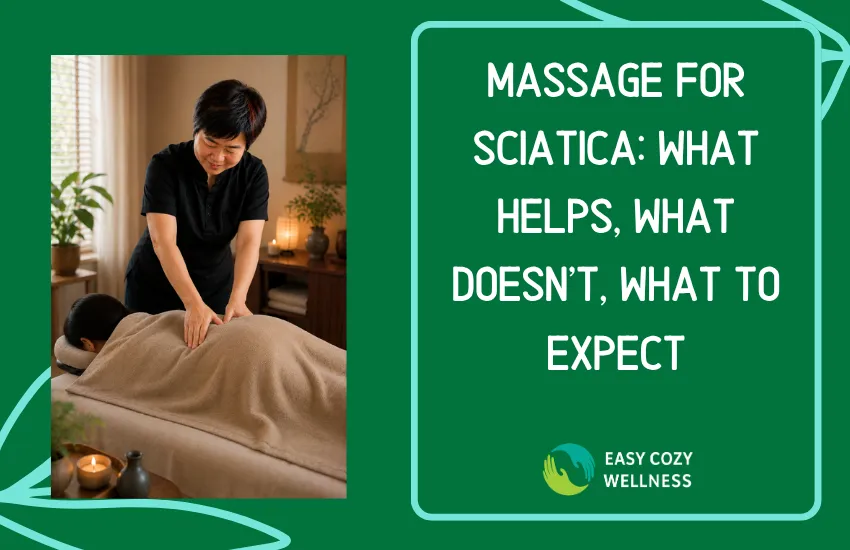
Massage for Sciatica: What Helps, What Doesn't, What to Expect
Massage for sciatica can bring real relief, but only when the pain is coming from tight muscles pressing on the sciatic nerve rather than a disc or spinal problem. At Easy Cozy Wellness in North Nanaimo, we see this distinction daily: some clients respond well to focused deep tissue and acupressure work, while others need a doctor's assessment first. This guide walks through what actually works, what doesn't, and how to tell which category you fall into.
What Is Sciatica, Really?
Sciatica is not a diagnosis on its own; it's a symptom pattern. It describes pain that radiates along the path of the sciatic nerve, typically starting in the lower back or buttock and travelling down one leg, sometimes as far as the foot. The Cleveland Clinic notes that sciatica commonly stems from irritation or compression of the nerve roots in the lower spine, and can also result from tightness in the piriformis muscle deep in the buttock pressing against the nerve as it passes through.
That second cause, piriformis-related sciatica, is the type massage is genuinely built to address. The first cause, a herniated disc or spinal stenosis pressing on a nerve root, is a medical issue that massage cannot fix, though it may still ease the secondary muscle tension that builds up around it.
Can Massage for Sciatica Actually Help?
Yes, in the right circumstances. When sciatic-type pain is driven by a chronically tight or overworked piriformis, glute, or hip rotator muscle group, targeted massage and acupressure can reduce that tightness, which in turn reduces pressure on the nerve. Physiopedia describes manual therapy, including massage, as a commonly used conservative approach for piriformis syndrome, often alongside stretching and activity modification.
What massage will not do is shrink a herniated disc, reverse spinal stenosis, or resolve nerve root compression caused by structural changes in the spine. If your pain is accompanied by numbness that doesn't shift with position, weakness in the leg or foot, or pain that started after a specific back injury, massage should be paired with, not substituted for, a proper medical assessment.
What Massage Techniques Work Best for Sciatica?
Not every massage style is equally useful here. The approaches that tend to help most with muscle-driven sciatic pain include:
Deep tissue work on the piriformis and gluteal muscles, released slowly and with client feedback guiding pressure, since this area sits close to the nerve itself.
Acupressure along the lower back, hip, and leg, which can ease the broader pattern of tension that often builds around a compressed nerve as the body compensates.
Hamstring and hip flexor release, because tightness in these muscles frequently pulls on the pelvis in ways that aggravate piriformis tension.
Gentle, gradual pressure rather than aggressive digging, particularly in the first session, since sciatic tissue can be reactive and overly forceful work can flare symptoms rather than settle them.
This is one of the reasons a full-body or targeted 60-minute session tends to work better for sciatica than a rushed treatment; the surrounding hip and lower back muscles usually need attention alongside the piriformis itself.
When Massage Is Not Enough: Signs You Need a Doctor or Physiotherapist
Honesty matters here more than almost anywhere else in pain management. See a doctor or physiotherapist, rather than booking massage alone, if you notice:
Numbness or tingling that is constant and not related to position or activity
Any weakness in the leg, ankle, or foot, such as difficulty lifting the front of your foot
Loss of bladder or bowel control (this needs emergency care immediately)
Pain that began suddenly after a fall, car accident, or heavy lifting injury
Symptoms that have lasted more than six weeks with no improvement despite conservative care
The NHS advises seeking urgent medical attention for sciatica symptoms that come with sudden numbness or weakness in both legs, or loss of bladder or bowel control, as these can indicate a serious condition requiring prompt treatment. WorkSafeBC also recommends a proper diagnostic workup for any radiating leg pain following a workplace injury before starting a manual therapy plan, so the underlying cause is understood first.
If your practitioner ever tells you your pain doesn't sound muscle-related, that's not a brush-off; it's the responsible answer.
What to Expect During a Sciatica-Focused Massage Session at Easy Cozy Wellness
Our practitioners are NHPC members, not RMTs, so we don't bill through extended health insurance the way a registered massage therapist would. What we do offer is focused, unhurried hands-on work: a typical sciatica session starts with a conversation about where the pain radiates, what makes it worse, and whether you've had it assessed medically. From there, treatment usually combines deep tissue work on the piriformis and hip rotators with acupressure along the lower back and leg.
A 60-minute full body session ($70) gives enough time to address both the local tight muscles and the surrounding compensations, while a 90-minute session ($105) allows for more thorough work if your pattern is widespread or long-standing. We'll never continue aggressive pressure directly on a nerve if it increases your symptoms; the goal is calming the tissue, not pushing through pain.
How Often Should You Get Massage for Sciatica Relief?
For an active flare-up, once a week for two to three weeks is a reasonable starting point to judge whether massage is helping. If you notice steady improvement, spacing sessions out to every two to three weeks for maintenance is common. If there's no meaningful change after three sessions, that's a signal to get a medical assessment rather than continuing the same approach indefinitely.
Frequently Asked Questions
Can a massage make sciatica worse? It can, if pressure is applied too aggressively directly over an irritated nerve. This is why a gentler first session and clear communication with your practitioner matter, especially in the early stages of treatment.
Is acupressure or deep tissue massage better for sciatica? They work well together. Acupressure tends to address the broader pattern of tension around the hip and lower back, while deep tissue targets the piriformis itself. Most sessions at Easy Cozy Wellness blend both.
How long does it take for massage to relieve sciatica? Muscle-driven sciatica often responds within two to three sessions. If a disc or nerve root issue is the underlying cause, massage may ease surrounding tension but won't resolve the source, so improvement will be limited.
Do I need a doctor's referral before booking a massage for sciatica? No referral is required to book with us. That said, if your symptoms include numbness, weakness, or symptoms in both legs, we'd recommend a medical assessment first so we know we're treating the right thing.
Final Suggestion: If your sciatic pain feels tied to tight hips and a stubborn lower back rather than a specific injury, a session focused on deep tissue massage for the hips and glutes is often the right starting point, paired with the same acupressure principles covered in our guide to how acupressure relieves back pain. Clients managing long hours at a desk often find our office worker pain relief guide useful alongside sciatica-focused sessions, since desk posture is a common contributor to piriformis tightness. You can book a session directly at easycozy.ca/booking.

