Alternatives to Physiotherapy for Stress Pain: 5 Proven Options
Alternatives to Physiotherapy for Stress Pain: 5 Options
For stress-related pain, the muscle tension, body aching and physical tightness that comes from sustained psychological stress, there are five well-supported alternatives to physiotherapy, and massage therapy is the most directly targeted of them. This post explains what each option addresses, when each is most appropriate, and why physiotherapy is not always the best first step for stress-driven body pain.
Alternatives to Physiotherapy for Stress Pain: 5 Options
Why physiotherapy is not always the right first step for stress pain
The 5 best alternatives to physiotherapy for stress pain
1. Massage therapy (most directly targeted)
3. Progressive muscle relaxation and diaphragmatic breathing (self-directed)
5. Yoga therapy (therapeutic, not fitness-focused)
How to choose the right option for your situation
What does not work for stress-related pain
Stress pain treatment in Nanaimo
What are the best alternatives to physiotherapy for stress-related pain?
Why is physiotherapy not always the right treatment for stress pain?
How long does it take for massage to relieve stress-related muscle pain?
Can I treat stress muscle pain myself without professional treatment?
Why physiotherapy is not always the right first step for stress pain
Physiotherapy is designed primarily for rehabilitation: recovering function after injury, surgery or neurological events. It excels at progressive exercise programming, gait retraining, and managing conditions with clear structural pathology. For stress-related muscle pain, which is characterised by trigger points, nervous system dysregulation, and habitual muscle guarding rather than structural damage, the physiotherapy model is often not the most direct fit.
Stress-related pain does not have a structural injury that needs rehabilitation. It has a nervous system pattern that needs resetting, and muscle tension that needs direct mechanical release. These are the interventions that the alternatives to physiotherapy for stress pain below are designed to address.
According to Health Canada's position on complementary health interventions, massage therapy, acupressure and other manual approaches are evidence-supported options for stress-related musculoskeletal pain in adults, appropriate as first-line or adjunct treatments (Government of Canada, 2024: https://www.canada.ca/en/health-canada.html).
The 5 best alternatives to physiotherapy for stress pain
1. Massage therapy (most directly targeted)
Massage therapy is the most direct intervention for stress muscle pain treatment because it operates on both the tissue and the nervous system simultaneously. Deep tissue massage releases the trigger points and fascial restrictions created by chronic stress. The massage experience simultaneously activates the parasympathetic nervous system, reducing the sympathetic activation that is maintaining the tension. This dual action is the reason massage produces results in stress-held tension that physiotherapy and exercise often do not.
2. Acupressure
Acupressure applies sustained pressure to specific points along the muscle and fascial lines associated with nervous system regulation and muscle tension release. For stress-related body pain, acupressure is particularly effective for the diaphragm, psoas, and hip tension that standard massage does not always fully reach. It also directly stimulates parasympathetic points that reduce the baseline nervous system activation driving the tension. At Easy Cozy, acupressure is used in combination with deep tissue massage for stress-related presentations.
3. Progressive muscle relaxation and diaphragmatic breathing (self-directed)
Progressive muscle relaxation, the deliberate tensing and releasing of each muscle group in sequence, is one of the most evidence-supported self-directed interventions for stress muscle tension. The Canadian Mental Health Association recommends it as a primary self-management technique for stress-related physical symptoms, with consistent evidence showing reductions in muscle tension, anxiety and pain perception (CMHA, 2024: https://cmha.ca/). Diaphragmatic breathing addresses the breathing pattern changes that stress creates and reduces the accessory muscle overload in the neck and upper chest. Both are useful between professional sessions.
4. Acupuncture
Acupuncture shares some mechanism overlap with acupressure, stimulating specific points along the nervous system to reduce pain sensitisation and muscle tension. The evidence for acupuncture in stress-related musculoskeletal pain is reasonably strong, particularly for chronic presentations. It requires a trained practitioner and typically more sessions than massage for comparable results, but is appropriate for people who prefer needle-based over manual pressure approaches.
5. Yoga therapy (therapeutic, not fitness-focused)
Therapeutic yoga, specifically the kind that focuses on parasympathetic activation, sustained holds and breath-linked movement rather than strength or flexibility, addresses the stress-tension pattern through the movement and nervous system pathways simultaneously. Yin yoga and restorative yoga are the most appropriate styles for stress-related body pain. Standard hot yoga or power yoga classes, while valuable for fitness, do not address the nervous system component that is driving the tension.
How to choose the right option for your situation
If your pain is acute or primarily located in specific muscle groups, start with massage therapy. The most direct intervention for established trigger points and acute tension.
If your stress is primarily psychological and the body pain is secondary, combine massage (for the physical component) with self-directed techniques (progressive muscle relaxation, breathing) for the cognitive component.
If you prefer to work with a practitioner for nervous system regulation, acupuncture is an appropriate alternative if massage is not accessible or preferred.
If your schedule prevents regular professional sessions, establish a daily self-directed practice of progressive muscle relaxation and diaphragmatic breathing as a foundation.
If you have been managing stress pain for months without resolution, professional massage addressing the established trigger points will produce faster results than self-management alone at this stage.
For non-physiotherapy options for chronic stress pain, the most effective combination is typically professional massage sessions (treating the established pattern) combined with self-directed nervous system regulation between sessions (preventing re-accumulation).
What does not work for stress-related pain
Complete rest: stress-held tension does not resolve through inactivity. The trigger points and fascial restrictions remain regardless of how much rest is taken.
Generic stretching without trigger point work: stretching lengthens muscles temporarily but does not deactivate trigger points. The tension returns after each stretch session.
Pain medication alone: masks the symptom without addressing any of the underlying mechanisms. Appropriate for short-term management but not a standalone solution for stress-related pain.
Addressing only the psychological stress without the body: the muscle patterns that chronic stress has established in the tissue are not resolved by reducing stress alone. The tissue needs direct intervention.
Stress pain treatment in Nanaimo
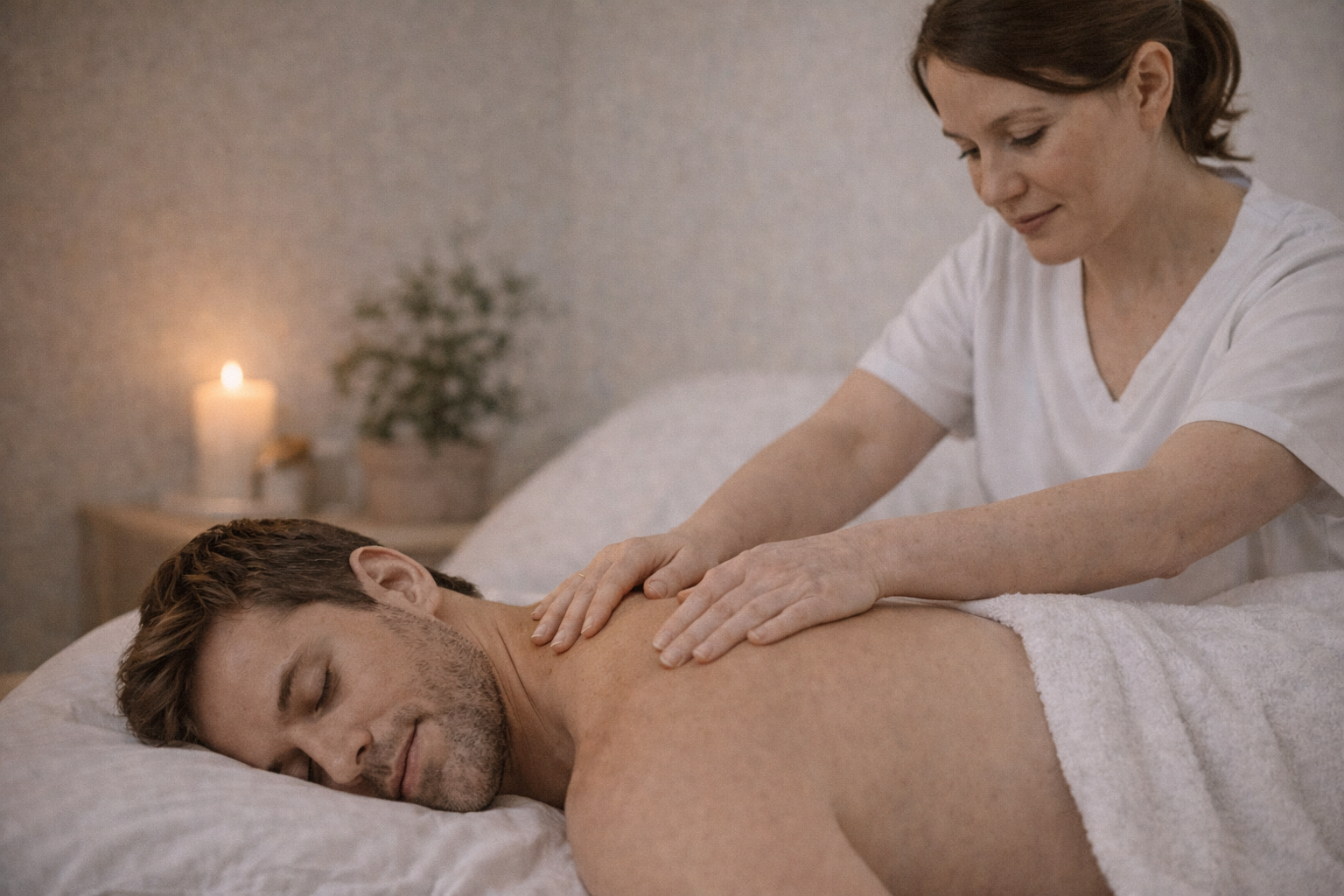
At Easy Cozy in Nanaimo, stress muscle pain treatment without physiotherapy is one of our most common presentations. Sessions combine deep tissue massage targeting the primary stress storage sites, upper trapezius, lower back, hips, with acupressure on the nervous system points that reduce parasympathetic activation and help the tissue release at a deeper level.
Many clients arrive having tried physiotherapy for their stress pain without the expected results, not because physiotherapy was wrong, but because the treatment model did not match the mechanism. The NHS guidelines acknowledge that for non-specific musculoskeletal pain with a significant psychological or stress component, manual therapy approaches including massage are often more appropriate than exercise-based rehabilitation (NHS, 2024: https://www.nhs.uk/live-well/exercise/back-exercises-and-stretches/). No referral, no waitlist.
For massage vs physiotherapy for stress and body tension, the honest answer is massage first for stress-driven tension, physiotherapy when there is a rehabilitation or structural exercise component needed alongside or after.
Start here, book a session at Easy Cozy today. We will assess the specific stress tension pattern and treat the source directly. No referral needed.
Book Now: https://easycozy.ca/booking
Frequently asked questions
What are the best alternatives to physiotherapy for stress-related pain?
The five best alternatives to physiotherapy for stress-related pain are: massage therapy (most directly targeted for trigger points and nervous system regulation), acupressure, progressive muscle relaxation and diaphragmatic breathing (self-directed), acupuncture, and therapeutic yoga. Massage therapy is the most effective first-line option for established stress-held tension because it addresses both the tissue and nervous system components simultaneously.
Why is physiotherapy not always the right treatment for stress pain?
Physiotherapy is designed for rehabilitation after injury or surgery. Stress-related pain does not have a structural injury, it has a nervous system pattern that maintains muscle guarding and trigger points. The physiotherapy model of progressive exercise is less directly matched to this mechanism than manual therapies that work on the tissue and nervous system simultaneously. Physiotherapy can be appropriate when exercise programming is needed alongside tissue treatment.
How long does it take for massage to relieve stress-related muscle pain?
For acute stress-related tension that has been building for a few weeks, one to two sessions typically produce significant relief. For chronic stress-held tension that has been present for months, a course of four to six sessions combined with self-directed nervous system regulation between sessions produces the most sustained result. The nervous system component recalibrates gradually, sustained improvement requires consistent treatment over time.
Can I treat stress muscle pain myself without professional treatment?
Self-directed techniques, progressive muscle relaxation, diaphragmatic breathing, consistent movement, are effective at preventing stress tension from accumulating and maintaining the results of professional treatment. For established trigger points and chronic stress-held tension, self-management alone is typically insufficient. Professional massage reaches the tissue depth and neural pathways that self-treatment cannot. A combination of both produces the most complete result.
Final Suggestion
If you’re looking for massage therapy in Nanaimo that helps you feel relaxed, refreshed, and back to your best, Easy Cozy Wellness is here to help.
We focus on real results, not just temporary relief. Whether you’re dealing with daily tension, chronic discomfort, or simply need time to unwind, our treatments are designed to support your body and your overall well-being.
We regularly help clients with:
Sciatic pain (sciatica)
Hip pain
Knee pain
Elbow pain (tennis elbow, golfer’s elbow)
Leg pain and muscle tightness
Foot pain and plantar fasciitis
Hand and wrist pain (including carpal tunnel symptoms)
Joint pain and inflammation
Muscle soreness and post-workout recovery
Chronic pain conditions
Nerve pain and tension
Upper back and mid-back pain
Glute pain and piriformis syndrome
Calf tightness and strain
Shin splints
Ankle pain and mobility issues
Postural pain from sitting or desk work
Repetitive strain injuries (RSI)
Stress, tension, and fatigue
Our services include:
Relaxation massage
Deep tissue massage
Therapeutic massage
Pain relief massage
Stress relief treatments
Wellness and recovery sessions
Preventative body care
At Easy Cozy Wellness, the goal is simple. Help your body feel better, move better, and recover faster.
If you’ve been searching for:
massage therapy Nanaimo
best massage Nanaimo
affordable massage Nanaimo
deep tissue massage Nanaimo
relaxation massage Nanaimo
pain relief massage Nanaimo
wellness clinic Nanaimo
You’re in the right place.
Give us a call at 778-561-0208 and book your next wellness appointment today.
Or visit https://easycozy.ca/ to learn more about our services, see current offers, and review our satisfaction guarantee.We’re proud to offer a more affordable option compared to many local providers, without compromising on quality or results.
Once you experience the difference, you’ll understand why so many people choose Easy Cozy Wellness for ongoing care.
You can schedule your massage appointment here:
Relaxation is not a luxury — it’s an essential part of staying healthy and energized.
Your body will thank you. Talk soon.

