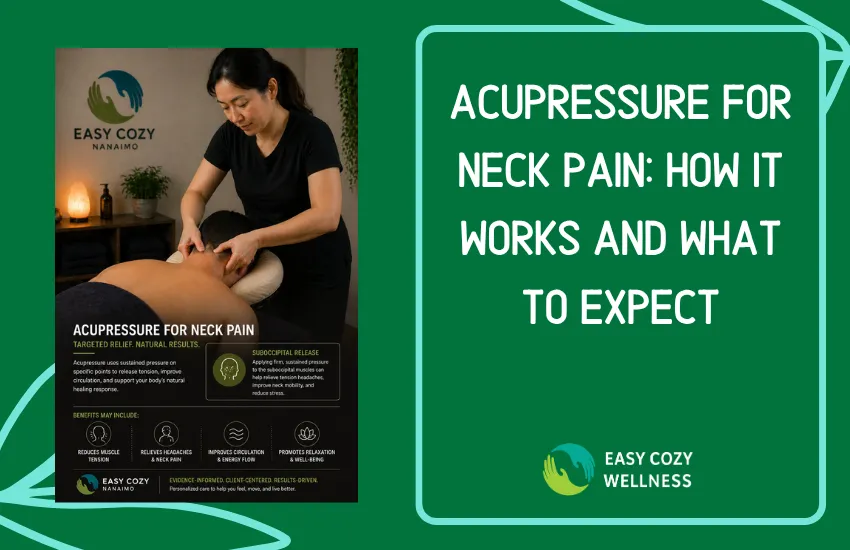
Acupressure for Neck Pain: How It Works and What to Expect
Acupressure for Neck Pain: How It Works and What to Expect
Acupressure for neck pain works through two distinct mechanisms: sustained pressure at specific anatomical points deactivates trigger points in the cervical and upper thoracic muscles, while pressure at specific neurological points activates the parasympathetic nervous system and reduces the sympathetic tone that maintains the tension. The result is a release that is often qualitatively different from what massage alone produces, particularly for the deep suboccipital and levator scapulae structures that standard massage cannot reach with sufficient depth and precision.
This post explains how acupressure differs from massage, which specific points are most relevant for neck pain, what you will feel during a session, and what to expect in the hours and days afterward.
Table of contents
1. How acupressure for neck pain differs from massage
2. The key acupressure points for neck pain
3. What you will feel during treatment
4. What to expect after a session
5. Is acupressure or massage better for neck pain?
6. Acupressure for neck pain treatment at Easy Cozy
7. Frequently asked questions
How acupressure for neck pain differs from massage
Massage addresses the broad myofascial tissue through gliding and kneading strokes that increase circulation, reduce overall muscle tension, and warm the tissue. It is highly effective for the superficial and mid-layer cervical and upper thoracic muscles.
Acupressure uses sustained, stationary pressure at specific anatomical points rather than movement. This sustained pressure produces a different tissue response: the trigger point initially resists the pressure (the palpable tautness increases briefly), then releases as the contracted sarcomeres relax. According to Physiopedia, the sustained pressure mechanism of acupressure deactivates trigger points through a combination of local ischaemic pressure response, mechanoreceptor activation, and direct sarcomere release that gliding massage strokes do not consistently produce in deep or small-diameter muscle structures.
The practical distinction: massage is more effective for broad tissue coverage and circulation. Acupressure is more effective for deep, precise trigger point deactivation in structures like the suboccipitals, deep cervical flexors, and levator scapulae attachment at the C1-C4 transverse processes.
The key acupressure points for neck pain
GB 21 (Gallbladder 21): upper trapezius
Located at the midpoint of the upper trapezius muscle, between the base of the neck and the shoulder joint. The most commonly active trigger point in neck pain presentations. Sustained pressure at GB 21 deactivates the upper trapezius trigger point and refers into the lateral neck and temple. This is the first point addressed in almost every neck pain session.
GB 20 (Gallbladder 20): suboccipital region
Located in the depression between the SCM and trapezius attachments at the base of the skull. Pressure at GB 20 releases the suboccipital muscles and is one of the most effective treatments for occipital headaches and base-of-skull tension. The suboccipitals are the most difficult cervical muscles to reach with standard massage; acupressure at GB 20 reaches them with the specificity required.
BL 10 (Bladder 10): cervical paraspinals
Located on the cervical paraspinal muscles at the level of C1-C2. Sustained pressure at BL 10 addresses the deep cervical paraspinals that are loaded by forward head position and sustained neck rotation. This point is particularly relevant for the stiffness and aching that runs from the mid-cervical region up to the skull.
SI 11 (Small Intestine 11): infraspinatus and mid-scapular region
Located in the infraspinatus fossa on the back of the shoulder blade. Tender in people with referred pain from the upper back into the neck and shoulder. Releasing SI 11 reduces the mid-back tension that loads the upper cervical region through the thoracic fascial connection.
LI 4 (Large Intestine 4): systemic pain modulation
Located in the webbing between the thumb and index finger. LI 4 is a systemic pain modulation point: sustained pressure activates descending inhibitory pain pathways and produces a generalised reduction in pain sensitivity. It does not directly release neck tissue but significantly reduces the pain amplification that central sensitisation adds to neck pain presentations. [related reading: Neck Pain Relief Nanaimo: Treatment at Easy Cozy Wellness]
What you will feel during treatment
The sensation of acupressure is distinctly different from massage and is worth understanding before your first session.
Initial pressure: a firm, focused pressure that is more concentrated than massage. The pressure is applied slowly and held in position rather than moving.
The "acupressure sensation": a dull, heavy, or radiating sensation at the point and in the referral pattern of the trigger point being treated. For GB 21 this is a lateral neck and temple sensation; for GB 20 a base-of-skull and occipital sensation. This is normal and indicates the trigger point is being engaged.
The release: the sensation peaks and then diminishes as the trigger point releases. The muscle noticeably softens under the pressure at the moment of release.
Pressure level: informed by constant feedback. The pressure is increased gradually to the point where the sensation is present but manageable. You direct the depth throughout.
According to the Cleveland Clinic, the characteristic acupressure sensation (dull, heavy pressure that radiates from the point of application) indicates mechanoreceptor activation and is associated with the most effective trigger point deactivation outcomes (Cleveland Clinic, 2024: https://my.clevelandclinic.org/health/articles/acupressure).
What to expect after a session
The post-treatment experience of acupressure for neck pain has a characteristic pattern:
Immediate: significant reduction in the aching tension that was present before the session. Many clients describe the neck as feeling "lighter" or noticeably less compressed.
2-6 hours post-session: possible mild tenderness at the treatment points. This is the tissue responding to the deactivation work and is normal. It resolves within 24 hours in most cases.
24-48 hours post-session: the sustained relief becomes clearer as the post-treatment tenderness resolves. This is the window where most clients notice the full effect.
Days 3-7: the degree to which the tension has returned indicates the rate of re-accumulation from the ergonomic or stress drivers maintaining it. This informs the treatment interval decision.
For a more detailed breakdown of the post-treatment experience and what is normal, see the dedicated guide.
Is acupressure or massage better for neck pain?
The question is not which is better in isolation: it is which combination is most appropriate for your specific presentation. In practice:
For superficial and mid-layer neck and shoulder tension: massage is more efficient. It covers the broad tissue area faster than point-by-point acupressure.
For deep trigger points in the suboccipitals, deep cervical flexors, and levator attachment: acupressure produces the required precision and depth more reliably than massage strokes.
For stress-driven tension with a significant nervous system component: acupressure at the neurological modulation points (LI 4, GB 20) combined with massage on the tissue produces better outcomes than either alone.
For recurrent neck pain that has not fully responded to massage alone: adding acupressure at the deep cervical points often produces the component that massage was not reaching.
According to the NHS, the combination of manual massage and acupressure produces better outcomes for neck pain than either technique applied alone, with the complementary mechanisms of the two approaches addressing different aspects of the myofascial presentation (NHS, 2024: https://www.nhs.uk/conditions/neck-pain-and-stiff-neck/).
Acupressure for neck pain treatment at Easy Cozy
At Easy Cozy in Nanaimo, acupressure is integrated into every neck pain session where deep cervical trigger points are active. The session begins with a brief palpation assessment identifying which specific points are most tender and most active, and treatment is directed at those structures. Most sessions combine deep tissue massage on the upper trapezius and thoracic region with acupressure at the suboccipital, deep cervical, and levator scapulae points.
Clients who have had neck massage elsewhere without lasting results often find that adding the acupressure component produces the piece that was missing. No referral needed, no waitlist.
Try acupressure at Easy Cozy today. Book a session; no referral needed.
Book Now: https://easycozy.ca/booking
Frequently asked questions
How does acupressure work for neck pain?
Acupressure uses sustained, stationary pressure at specific anatomical points to deactivate trigger points in the cervical and upper thoracic muscles and activate neurological pain-modulation pathways. The sustained pressure produces a different tissue response than massage strokes: the trigger point resists then releases, producing a softening of the muscle that is measurable under the practitioner's hands. The result is a more precise and often deeper release of the deep cervical structures than massage alone achieves.
What are the best acupressure points for neck pain?
The five most clinically relevant acupressure points for neck pain are: GB 21 (upper trapezius, midpoint between neck and shoulder), GB 20 (suboccipital region, base of skull), BL 10 (deep cervical paraspinals at C1-C2 level), SI 11 (infraspinatus and mid-scapular region), and LI 4 (thumb-index webbing, for systemic pain modulation). The specific combination used in each session depends on which points are most active in the individual presentation.
Is acupressure better than massage for neck pain?
Acupressure and massage address different aspects of neck pain and are most effective in combination. Massage covers broad tissue areas efficiently and increases circulation throughout the cervical and thoracic region. Acupressure provides the precise, sustained pressure required to deactivate deep trigger points in the suboccipitals and deep cervical flexors that massage strokes cannot reach consistently. The combination produces better outcomes than either technique alone.
What does acupressure feel like on the neck?
Acupressure produces a dull, focused, often radiating sensation at the point of application that is distinct from the broader sensation of massage. The sensation is present but manageable and indicates the trigger point is being engaged. It peaks and then diminishes as the trigger point releases. After the session, the neck typically feels noticeably lighter and less compressed than before, with possible mild tenderness at the treatment points that resolves within 24 hours.
Final Suggestion
If you’re looking for massage therapy in Nanaimo that helps you feel relaxed, refreshed, and back to your best, Easy Cozy Wellness is here to help.
We focus on real results, not just temporary relief. Whether you’re dealing with daily tension, chronic discomfort, or simply need time to unwind, our treatments are designed to support your body and your overall well-being.
We regularly help clients with:
Sciatic pain (sciatica)
Hip pain
Knee pain
Elbow pain (tennis elbow, golfer’s elbow)
Leg pain and muscle tightness
Foot pain and plantar fasciitis
Hand and wrist pain (including carpal tunnel symptoms)
Joint pain and inflammation
Muscle soreness and post-workout recovery
Chronic pain conditions
Nerve pain and tension
Upper back and mid-back pain
Glute pain and piriformis syndrome
Calf tightness and strain
Shin splints
Ankle pain and mobility issues
Postural pain from sitting or desk work
Repetitive strain injuries (RSI)
Stress, tension, and fatigue
Our services include:
Relaxation massage
Deep tissue massage
Therapeutic massage
Pain relief massage
Stress relief treatments
Wellness and recovery sessions
Preventative body care
At Easy Cozy Wellness, the goal is simple. Help your body feel better, move better, and recover faster.
If you’ve been searching for:
massage therapy Nanaimo
best massage Nanaimo
affordable massage Nanaimo
deep tissue massage Nanaimo
relaxation massage Nanaimo
pain relief massage Nanaimo
wellness clinic Nanaimo
You’re in the right place.
Give us a call at 778-561-0208 and book your next wellness appointment today.
Or visit https://easycozy.ca/ to learn more about our services, see current offers, and review our satisfaction guarantee.We’re proud to offer a more affordable option compared to many local providers, without compromising on quality or results.
Once you experience the difference, you’ll understand why so many people choose Easy Cozy Wellness for ongoing care.
You can schedule your massage appointment here:
Relaxation is not a luxury — it’s an essential part of staying healthy and energized.
Your body will thank you. Talk soon.

