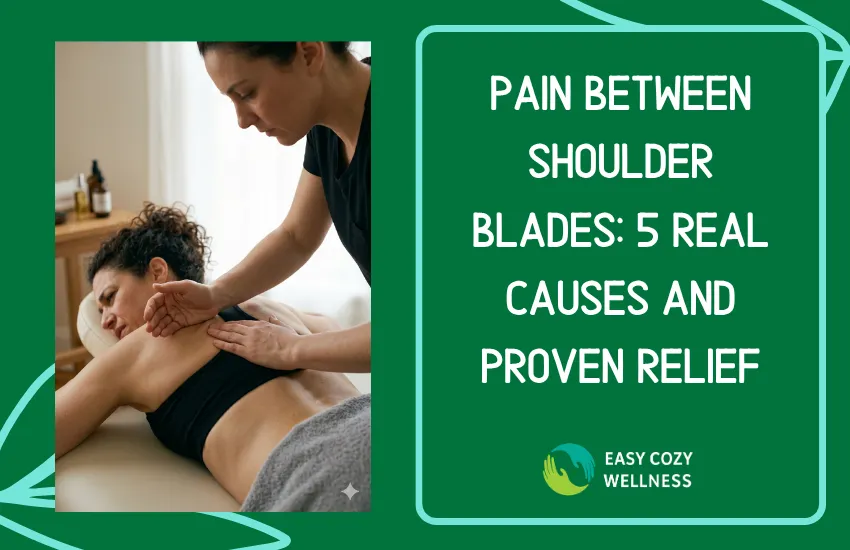
Pain Between Shoulder Blades: 5 Real Causes and Proven Relief
Pain Between Shoulder Blades: 5 Real Causes and Proven Relief
Pain between the shoulder blades has five main causes — and the frustrating thing about this location is that people frequently treat the wrong one. The middle of the upper back is where several different muscular and postural patterns converge, which is why it is also where pain tends to persist despite attempts at self-treatment that work on adjacent areas.
This post identifies each of the five causes, explains what specific muscles or structures are involved in each, and describes what treatment actually reaches the source of the pain in this notoriously difficult location.
Table of contents
1. The 5 causes of pain between the shoulder blades
2. Why this location is hard to self-treat
3. What actually relieves pain between the shoulder blades
4. When to seek medical assessment
5. Upper back pain treatment in Nanaimo
6. Frequently asked questions

The 5 causes of pain between the shoulder blades
According to Physiopedia, the thoracic spine and surrounding musculature is the second most common site of musculoskeletal pain in desk workers after the lumbar spine, with rhomboid, mid-trapezius and thoracic paraspinal overload identified as the primary muscle-driven causes (Physiopedia, 2024:https://www.physio-pedia.com/Thoracic_Spine_Fracture).
1. Rhomboid muscle overload
The rhomboids are the primary drivers of pain between the shoulder blades. They run diagonally from the thoracic spine to the medial edge of each shoulder blade, and their job is to retract the shoulder blades — pull them together and back. In desk posture, the shoulder blades are held protracted (forward) for hours, which means the rhomboids are constantly stretched and struggling to maintain position against the forward pull. This sustained eccentric load creates trigger points that produce the aching, burning pain between the shoulder blades that most desk workers recognise.
2. Mid-trapezius and lower trapezius weakness
The middle and lower trapezius fibres are responsible for keeping the shoulder blades in the correct position relative to the thoracic spine. In sustained desk posture, these muscles become progressively weaker as the upper trapezius (which elevates and protracts) dominates. Upper back pain between shoulder blades that has a burning, fatiguing quality is typically driven by weakness and overload in these mid and lower trapezius fibres.
3. Thoracic paraspinal trigger points
The thoracic paraspinals — the deep muscles running alongside the thoracic spine — develop trigger points from the sustained isometric contraction of holding a rounded sitting posture. These trigger points refer pain in a band across the upper back and can produce the specific sensation of a knot or hard point between the shoulder blades that many people can feel when they reach back.
4. Serratus anterior weakness and scapular winging
The serratus anterior holds the shoulder blade flat against the rib cage. When it weakens — which occurs in people with poor thoracic mobility and sustained protracted scapular posture — the shoulder blade lifts slightly away from the ribs at the medial border. This is called scapular winging, and it transfers load to the rhomboids and mid-trapezius in an altered pattern that creates pain at the medial scapular border.
5. Referred pain from cervical structures
Some pain experienced between the shoulder blades is referred from higher structures — typically the cervical facet joints at C5-C7 or trigger points in the levator scapulae. This referral pattern means that sharp pain between shoulder blades that does not respond to upper back treatment alone may have a cervical component that needs to be addressed simultaneously.
Why this location is hard to self-treat
Pain between the shoulder blades is notoriously difficult to self-treat for a simple anatomical reason: you cannot reach the middle of your own upper back effectively with your own hands. Foam rolling can reach some of the thoracic paraspinals, but it cannot deactivate rhomboid trigger points at the medial scapular border — which requires direct, sustained pressure at a specific point that requires a practitioner.
This is why how to relieve pain between shoulder blades searches consistently land on articles that recommend stretching and heat — not because these are the most effective treatments, but because they are the only things you can do yourself. They provide temporary relief but do not deactivate the trigger points at the source. Know more about how posture causes back pain.
What actually relieves pain between the shoulder blades
Self-management
•Doorframe stretch: stand in a doorway with arms at 90 degrees and step forward to stretch the pectorals — this indirectly reduces the protraction pull on the rhomboids.
•Thoracic extension over a chair back or foam roller: gently extending over a support at mid-thoracic level increases thoracic mobility and reduces the sustained kyphosis loading the thoracic paraspinals.
•Shoulder blade retractions: pull the shoulder blades together and down for 5 seconds, 10 repetitions hourly. This activates the rhomboids and mid-trapezius in their shortened position, which is one of the few active corrections that directly addresses the weakened muscle pattern.
•Heat on the mid-back: 15 minutes before bed reduces thoracic paraspinal trigger point activity.
Professional treatment
Targeted deep tissue massage on the rhomboids and mid-trapezius — the primary pain generators — combined with thoracic paraspinal release produces relief that self-management consistently cannot achieve. Acupressure at the medial scapular border and at the rhomboid trigger points reaches the depth required to deactivate them. The NHS recommends manual therapy for thoracic pain with a myofascial component as a first-line option, specifically noting that therapist-directed treatment produces significantly faster resolution than self-management alone for this location (NHS, 2024: https://www.nhs.uk/conditions/back-pain/).
When to seek medical assessment
Pain between the shoulder blades that has a clear postural or occupational driver is safe to treat with massage. Seek medical assessment before treatment if:
•The pain is severe, sudden-onset, and has no obvious postural cause
•Pain is accompanied by shortness of breath, chest pain, or pain radiating around the ribs
•Upper back pain is accompanied by abdominal symptoms — pain between the shoulder blades can occasionally be referred from gallbladder or pancreatic conditions
•The pain is significantly worse lying flat or at night
•You have a history of osteoporosis — thoracic vertebral fractures can present as mid-back pain
If none of those apply and your pain fits the desk-work or posture-related pattern described above, massage therapy is an appropriate and effective first-line treatment.
Upper back pain treatment in Nanaimo
At Easy Cozy in Nanaimo, pain between shoulder blades and spine is one of the most satisfying presentations to treat because the specific muscles involved are consistent and respond well to direct treatment. Sessions focus on the rhomboids, mid and lower trapezius, and thoracic paraspinals — the four muscle groups driving this pattern — with acupressure at the medial scapular border trigger points that standard massage often cannot fully reach.
According to Statistics Canada, upper back pain is the third most reported musculoskeletal complaint in working Canadians after lower back and neck pain, with computer use and sustained sitting as the dominant risk factors (Statistics Canada, 2024: https://www.statcan.gc.ca/en/start). No referral needed, no waitlist. [Related reading: why back pain keeps coming back]
Now that you understand what is causing your mid-back pain, the next step is targeted treatment that reaches the source. Book a session at Easy Cozy.
Book Now: https://easycozy.ca/booking
Frequently asked questions
What causes pain between the shoulder blades?
Pain between the shoulder blades is most commonly caused by rhomboid trigger points from sustained scapular protraction in desk posture, mid-trapezius overload and weakness, thoracic paraspinal trigger points, serratus anterior weakness causing scapular winging, or referred pain from cervical facet joints. Most desk workers with this pain have a combination of rhomboid and mid-trapezius involvement as the primary drivers.
Why does pain between my shoulder blades keep coming back?
Pain between the shoulder blades returns because the trigger points in the rhomboids and mid-trapezius are not being deactivated — they are being temporarily relieved by heat or stretching, then reloaded the following day by the same desk posture. Until the trigger points are directly treated and the postural loading pattern is corrected, the pain returns each time from the same baseline. Targeted massage combined with shoulder blade retraction exercises and ergonomic correction breaks this cycle.
Is massage effective for pain between the shoulder blades?
Yes — particularly for the rhomboid, mid-trapezius and thoracic paraspinal trigger points that drive most desk-related mid-back pain. The medial scapular border is one of the locations where massage by a trained practitioner produces results that self-treatment cannot achieve, because the depth and angle of pressure required to deactivate rhomboid trigger points cannot be replicated without a practitioner.
How long does it take to treat pain between the shoulder blades?
For recently established upper back pain, one to two sessions targeting the specific muscles involved typically produces significant sustained relief. For chronic mid-back pain that has been present for months, two to four sessions combined with daily shoulder blade retractions and ergonomic corrections produces the most complete result. Many clients notice improvement within the first session as the rhomboid and mid-trapezius trigger points begin to release.
Final Suggestion
If you’re looking for massage therapy in Nanaimo that helps you feel relaxed, refreshed, and back to your best, Easy Cozy Wellness is here to help.
We focus on real results, not just temporary relief. Whether you’re dealing with daily tension, chronic discomfort, or simply need time to unwind, our treatments are designed to support your body and your overall well-being.
We regularly help clients with:
• Back pain
• Neck pain
• Shoulder pain
• Lower back pain
• Lumbar pain
• Headaches and migraines
• Sciatic pain (sciatica)
• Hip pain
• Knee pain
• Elbow pain (tennis elbow, golfer’s elbow)
• Leg pain and muscle tightness
• Foot pain and plantar fasciitis
• Hand and wrist pain (including carpal tunnel symptoms)
• Joint pain and inflammation
• Muscle soreness and post-workout recovery
• Chronic pain conditions
• Nerve pain and tension
• Upper back and mid-back pain
• Glute pain and piriformis syndrome
• Calf tightness and strain
• Shin splints
• Ankle pain and mobility issues
• Postural pain from sitting or desk work
• Repetitive strain injuries (RSI)
• Stress, tension, and fatigue
Our services include:
• Relaxation massage
• Deep tissue massage
• Therapeutic massage
• Pain relief massage
• Stress relief treatments
• Wellness and recovery sessions
• Preventative body care
At Easy Cozy Wellness, the goal is simple. Help your body feel better, move better, and recover faster.
If you’ve been searching for:
massage therapy Nanaimo
best massage Nanaimo
affordable massage Nanaimo
deep tissue massage Nanaimo
relaxation massage Nanaimo
pain relief massage Nanaimo
wellness clinic Nanaimo
You’re in the right place.
Give us a call at 778-561-0208 and book your next wellness appointment today.
Or visithttps://easycozy.ca/tolearn more about our services, see current offers, and review our satisfaction guarantee.
We’re proud to offer a more affordable option compared to many local providers, without compromising on quality or results.
Once you experience the difference, you’ll understand why so many people choose Easy Cozy Wellness for ongoing care.
You can schedule your massage appointment here:
Relaxation is not a luxury — it’s an essential part of staying healthy and energized.
Your body will thank you. Talk soon.

