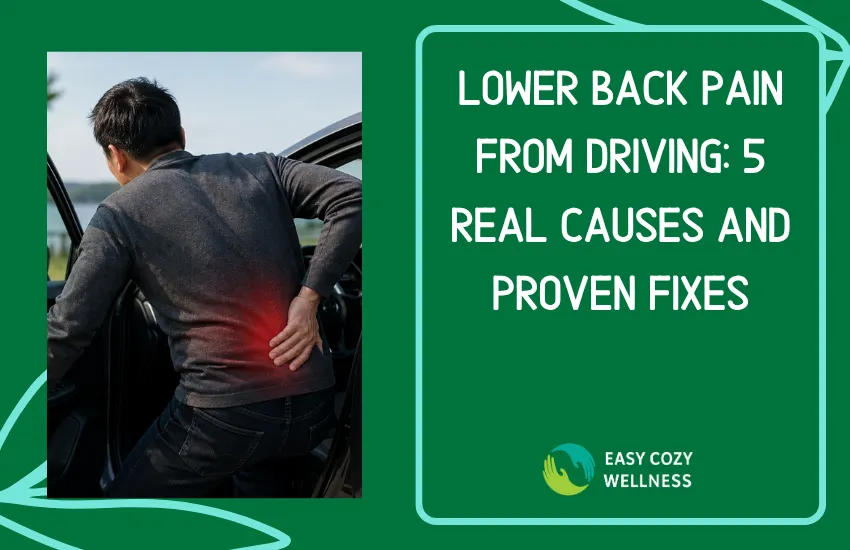
Lower Back Pain From Driving: 5 Real Causes and Proven Fixes
Lower Back Pain From Driving: 5 Real Causes and Proven Fixes
Lower back pain from driving is caused by five specific mechanisms — and the car seat is usually only part of the problem. Driving creates a unique combination of sustained compression, vibration, hip flexor loading and reduced movement that distinguishes driving-related back pain from ordinary sitting-related back pain, even though both involve sitting.
Understanding what is different about driving is important because it changes the treatment approach. Generic back pain advice often misses the specific drivers unique to prolonged car use.
Table of contents
1. The 5 causes of lower back pain from driving
2. Why driving is different from sitting at a desk
3. What you can do immediately
4. How to prevent lower back pain when driving long distances
5. Lower back pain from driving — treatment in Nanaimo
6. Frequently asked questions
The 5 causes of lower back pain from driving
According to Physiopedia, whole-body vibration from vehicle engines and road surfaces is a significant occupational health risk for professional drivers, producing spinal loading that accelerates disc degeneration and lumbar muscle fatigue. But even recreational driving produces the five mechanisms below in every driver who spends significant time behind the wheel.
1. Sustained lumbar flexion
Car seats are designed for forward visibility, not for lumbar health. Most car seats have insufficient lumbar support, which causes the lumbar spine to adopt a flexed (rounded) position during driving. Sustained lumbar flexion compresses the anterior lumbar discs, stretches the posterior ligaments, and progressively flattens the natural lumbar curve. Back pain sitting in a car that builds over the course of a drive is primarily driven by this progressive disc loading.
2. Hip flexor shortening in a fixed position
The hip flexors are held in a maximally shortened position during driving — the hip is flexed at 90 degrees or more, the knee is bent, and neither changes throughout the drive. Unlike desk sitting, where people occasionally stand, walk to a meeting or adjust position, driving provides almost no opportunity for hip flexor lengthening. Over a long drive, the hip flexors become progressively tighter and begin pulling the pelvis into anterior tilt, adding lumbar strain on top of the disc compression.
3. Whole-body vibration
Vehicle engines and road surfaces generate low-frequency vibration that is transmitted through the seat into the pelvis and spine. Research has consistently identified whole-body vibration as a risk factor for lumbar disc pathology and muscle fatigue, particularly when exposure is sustained over hours. The vibration causes small, repetitive spinal compressions that accumulate over the course of a drive.
4. Isometric muscle holding for steering and pedal control
Steering and pedal control require sustained, low-level muscle activation in the upper back, arms, and hip flexors for the entire duration of the drive. This isometric holding is below the threshold of conscious fatigue but above the threshold of metabolic demand — creating the progressive muscle aching that many drivers experience after 90 minutes or more behind the wheel.
5. Reduced movement and circulation
Driving eliminates the natural movement variation that even desk work includes. There is no standing, no walking to a colleague, no changing position. The spinal discs receive nutrition and remove waste products through movement-driven fluid exchange. Lower back pain after a long drive is partly driven by this disc ischaemia — the discs become progressively more compressed and less resilient as the drive continues.
Why driving is different from sitting at a desk
Desk sitting and driving both involve sustained seated posture, but driving adds three factors not present in desk work: whole-body vibration loading the spine mechanically, fixation of the hip in maximum flexion with no variation, and isometric holding requirements for vehicle control. These three additional factors make driving-related back pain more acute in onset, more predictably located in the lower lumbar segments, and more associated with hip flexor stiffness on getting out of the car.
This is why why does driving cause lower back pain and why does desk sitting cause lower back pain have different treatment priorities — driving requires more emphasis on hip flexor release and vibration-related disc recovery, while desk sitting requires more emphasis on trigger point deactivation and postural correction. [related reading: how posture causes back pain]
What you can do immediately
Lumbar support in the seat: roll a towel or jacket and place it at the small of your back before any drive longer than 30 minutes. This maintains the lumbar curve and significantly reduces disc compression.
Stop and walk every 90 minutes: even a 3-minute walk at a rest stop allows hip flexor lengthening and disc rehydration. This one change produces the largest reduction in post-drive back pain.
Seat position: move the seat forward enough that your knees are roughly at hip height or slightly below. A knee position above hip height maximises hip flexor shortening.
Hip flexor stretch immediately after driving: low lunge position, 45 seconds each side, immediately on reaching your destination. This reverses the hip flexor shortening before it consolidates.
Glute bridges before long drives: 10 slow glute bridges before getting in the car activates the glute muscles that will be suppressed during the drive.
How to prevent lower back pain when driving long distances
For drives over two hours: stop every 60-90 minutes, walk for 3-5 minutes, do a hip flexor stretch each side. Maintain lumbar support throughout. Keep the seat upright — reclining increases posterior disc loading. Set cruise control where safe to allow brief foot position changes.
For professional drivers or people who drive extensively for work, the cumulative loading from driving is significant enough to warrant regular professional treatment as a preventive measure. According to the NHS, chronic lower back pain in professional drivers is strongly associated with whole-body vibration exposure and sustained hip flexor loading, with manual therapy addressing the myofascial component identified as an effective intervention (NHS, 2024: https://www.nhs.uk/conditions/back-pain/).
Lower back pain from driving — treatment in Nanaimo
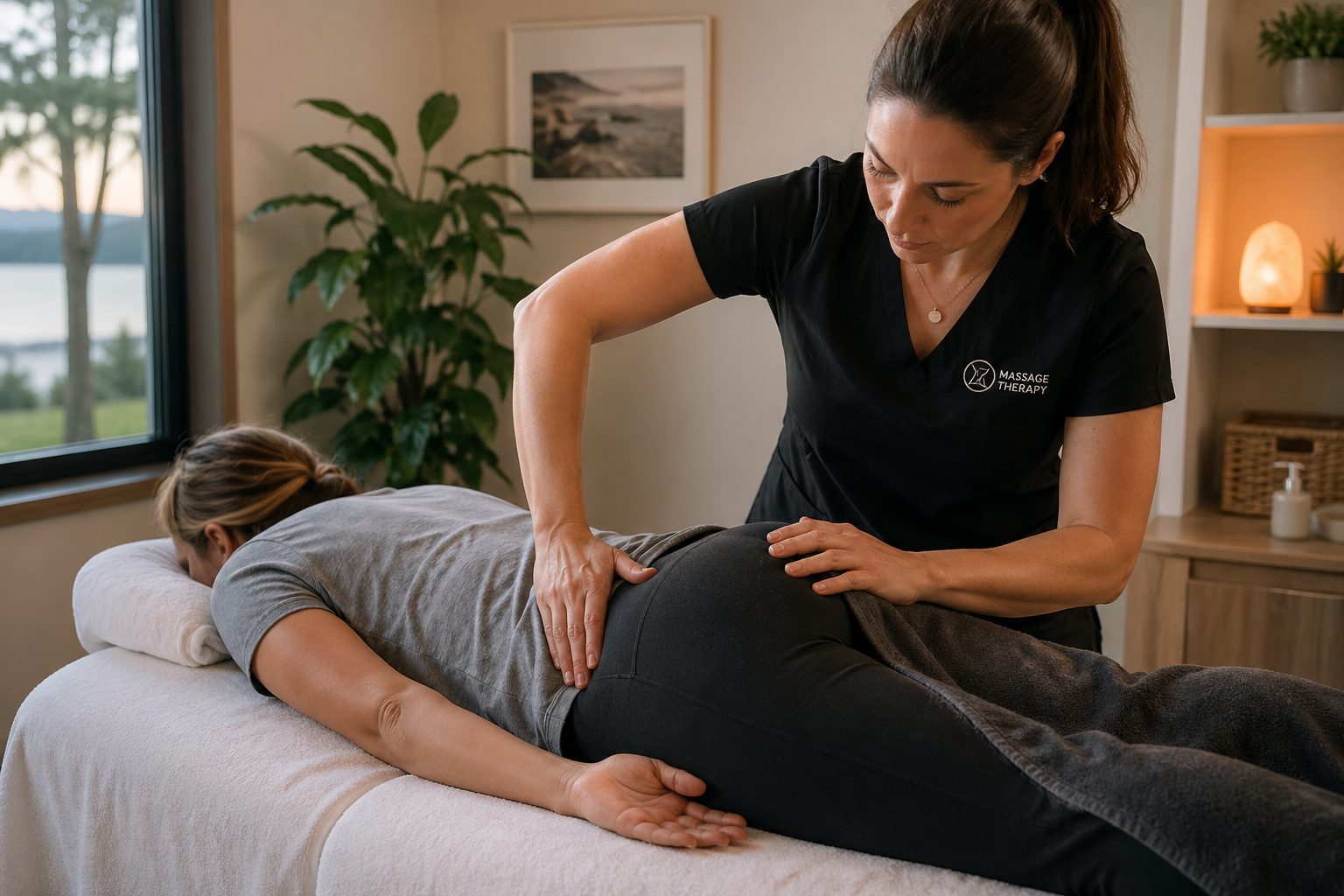
At Easy Cozy in Nanaimo, lower back pain from driving is particularly common among people who commute long distances, work in sales or delivery roles, or drive as part of their trade. Treatment combines deep tissue massage on the lumbar erectors and QL — which bear the isometric holding load — with acupressure on the hip flexors and iliacus, which are uniquely shortened by the driving position.
The iliacus — the hip flexor that attaches inside the pelvis rather than on the front of the thigh — is one of the most difficult structures to reach through standard massage. Acupressure at the specific points along the iliacus and psoas line reaches the hip flexor tension that driving accumulates in a way that glute bridges and stretching alone cannot fully reverse. According to Health Canada's evidence summary, massage therapy for occupational lower back pain — including driving-related presentations — is a safe and evidence-supported intervention with benefits extending to pain reduction, functional improvement and prevention of chronicity (Government of Canada, 2024: https://www.canada.ca/en/health-canada.html). [related reading: "lower back pain relief after a long sitting"]
Now that you understand what is driving your back pain, the next step is targeted treatment to release the structures maintaining the pattern. Book a session at Easy Cozy.
Book Now: https://easycozy.ca/booking
Frequently asked questions
Why does driving cause lower back pain?
Driving causes lower back pain through five mechanisms: sustained lumbar flexion from inadequate seat support, hip flexor shortening in the fixed-hip position, whole-body vibration loading the spinal discs, isometric muscle holding for steering and pedal control, and reduced movement preventing disc rehydration. These five factors combine to make driving-related back pain more acute and more hip-flexor-dominant than standard sitting-related back pain.
How do I relieve lower back pain after a long drive?
Immediately on reaching your destination: do a low lunge hip flexor stretch, holding 45 seconds each side. Then walk for 5 minutes to allow the spine to decompress and the discs to rehydrate. Apply heat to the lower back if the aching is significant. For persistent post-drive back pain that does not resolve within a few hours, targeted massage addressing the hip flexors, lumbar erectors and QL produces the fastest relief.
How do I prevent back pain when driving?
The most impactful prevention strategies are: lumbar roll or towel in the seat, stopping and walking every 60-90 minutes, keeping the seat upright rather than reclined, positioning the seat so the knees are at or below hip height, and doing hip flexor stretches immediately after every drive. For regular long-distance drivers, monthly massage sessions addressing the accumulated hip flexor and lumbar loading prevent the development of chronic pain.
Can massage help with driving-related lower back pain?
Yes — massage is particularly effective for the hip flexor shortening and lumbar erector trigger points that driving accumulates. The acupressure component is especially valuable for the iliacus and deep psoas tension that are uniquely loaded by the driving position and that standard self-stretching cannot fully reverse. Most clients with driving-related back pain notice significant relief within one to two targeted sessions.
Final Suggestion
If you’re looking for massage therapy in Nanaimo that helps you feel relaxed, refreshed, and back to your best, Easy Cozy Wellness is here to help.
We focus on real results, not just temporary relief. Whether you’re dealing with daily tension, chronic discomfort, or simply need time to unwind, our treatments are designed to support your body and your overall well-being.
We regularly help clients with:
• Back pain
• Neck pain
• Shoulder pain
• Lower back pain
• Lumbar pain
• Headaches and migraines
• Sciatic pain (sciatica)
• Hip pain
• Knee pain
• Elbow pain (tennis elbow, golfer’s elbow)
• Leg pain and muscle tightness
• Foot pain and plantar fasciitis
• Hand and wrist pain (including carpal tunnel symptoms)
• Joint pain and inflammation
• Muscle soreness and post-workout recovery
• Chronic pain conditions
• Nerve pain and tension
• Upper back and mid-back pain
• Glute pain and piriformis syndrome
• Calf tightness and strain
• Shin splints
• Ankle pain and mobility issues
• Postural pain from sitting or desk work
• Repetitive strain injuries (RSI)
• Stress, tension, and fatigue
Our services include:
• Relaxation massage
• Deep tissue massage
• Therapeutic massage
• Pain relief massage
• Stress relief treatments
• Wellness and recovery sessions
• Preventative body care
At Easy Cozy Wellness, the goal is simple. Help your body feel better, move better, and recover faster.
If you’ve been searching for:
massage therapy Nanaimo
best massage Nanaimo
affordable massage Nanaimo
deep tissue massage Nanaimo
relaxation massage Nanaimo
pain relief massage Nanaimo
wellness clinic Nanaimo
You’re in the right place.
Give us a call at 778-561-0208 and book your next wellness appointment today.
Or learn more about our lower back pain massage in Nanaimo.
We’re proud to offer a more affordable option compared to many local providers, without compromising on quality or results.
Once you experience the difference, you’ll understand why so many people choose Easy Cozy Wellness for ongoing care.
You can schedule your massage appointment here:
Relaxation is not a luxury — it’s an essential part of staying healthy and energized.
Your body will thank you. Talk soon.

