How to Prevent Lower Back Pain From Returning: 7 Steps
How to Prevent Lower Back Pain From Returning: 7 Steps
Preventing lower back pain from returning requires addressing the five underlying causes that make it recur — not just resting during flare-ups and returning to the same patterns that caused it. Most recurring lower back pain is predictable and preventable. The steps below address each cause directly and can be implemented starting today.
This is not a generic stretching list. Each step targets a specific driver of lower back pain recurrence with a clear rationale for why it works.
Table of contents
1. Why lower back pain keeps returning without prevention
2. The 7 proven prevention steps
3. What makes prevention fail
4. The role of professional treatment in prevention
5. Back pain prevention in Nanaimo
6. Frequently asked questions
Why lower back pain keeps returning without prevention
According to the NHS, approximately 70% of people who experience a first episode of lower back pain will have a recurrence within 12 months if the underlying causes are not addressed. The reason for this high recurrence rate is that pain relief is not the same as cause correction. Rest reduces acute inflammation; it does not lengthen the hip flexors, strengthen the glutes, correct sitting posture, or deactivate trigger points that will produce the next episode (NHS, 2024: https://www.nhs.uk/conditions/back-pain/).
The goal of lower back pain prevention is to address all five root causes simultaneously — because leaving any one unaddressed provides the trigger for the next episode.
The 7 proven prevention steps
Step 1: Daily glute activation (5 minutes)
Slow glute bridges, 10 repetitions, twice daily — once in the morning and once before bed. Glute muscle shutdown is the single most common driver of recurring lower back pain and the single most effective thing to address. Glutes that are active and strong support the lumbar spine. Glutes that are inhibited by sitting force the lumbar erectors and QL to compensate. This one exercise does more to prevent recurrence than any stretching protocol.
Step 2: Daily hip flexor release (3 minutes)
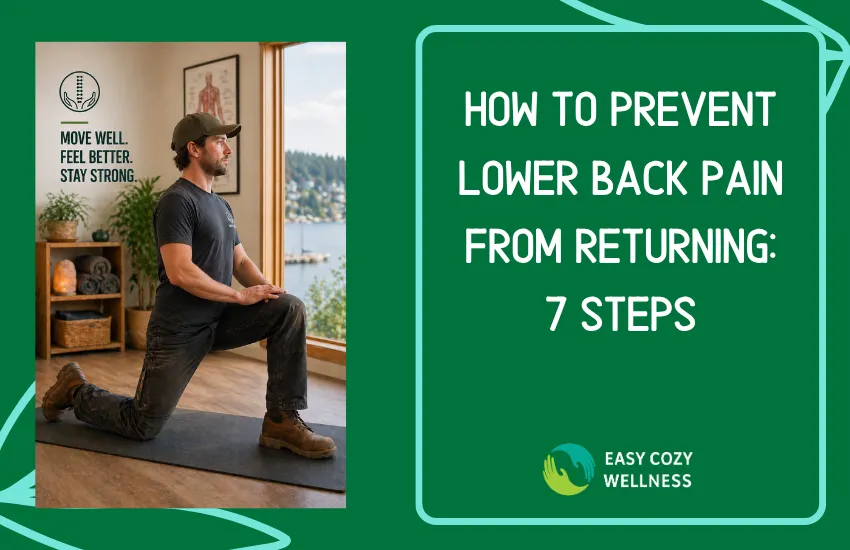
Low lunge hip flexor stretch, 45 seconds each side, every day. Short hip flexors maintain anterior pelvic tilt, which maintains elevated lumbar stress even between pain episodes. Stopping lower back pain from coming back is not possible while the hip flexors are shortened — because they are continuously pulling the pelvis forward and loading the lumbar spine between episodes.
Step 3: Movement breaks every 45 minutes (non-negotiable)
Stand and walk for 2-3 minutes every 45 minutes of sitting. Set a timer. Do not try to remember. This is the single most impactful environmental change for desk workers with recurring lower back pain. The spinal discs rehydrate through movement — without regular movement, they remain compressed and vulnerable.
Step 4: Ergonomic correction of sitting position
Screen at eye level. Feet flat on the floor. Lumbar support in the chair. If these three conditions are not met during the working day, all other prevention efforts are working against a background of continuous spinal loading that will eventually produce the next episode.
Step 5: Sleep position management
Sleeping on the stomach is the worst position for recurring lower back pain — it maintains lumbar hyperextension and hip rotation for hours. Side sleeping with a pillow between the knees maintains spinal alignment. Back sleeping with a pillow under the knees reduces lumbar disc pressure. The position you sleep in for 7-8 hours significantly affects the spinal loading you wake up with.
Step 6: Stress management for the stress-back connection
Psychological stress maintains sympathetic nervous system activation, which keeps the lumbar muscles in partial contraction. For people whose back pain is partly driven by stress — which includes most people whose back pain worsens during difficult periods — addressing stress through diaphragmatic breathing, exercise, or professional support is a direct back pain prevention strategy, not a separate issue. [related reading: how posture causes back pain]
Step 7: Regular professional treatment as maintenance
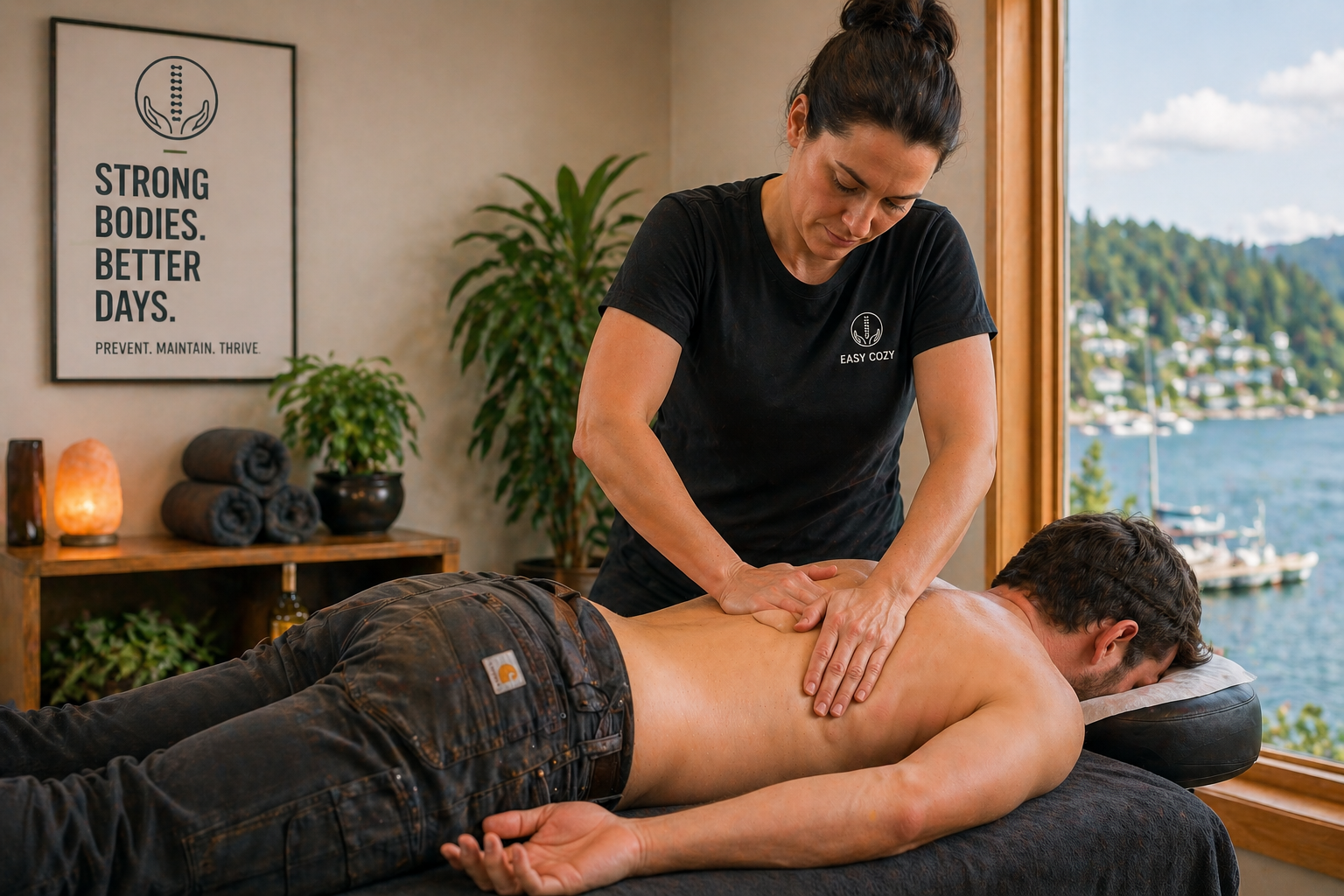
Monthly massage sessions that deactivate the trigger points accumulating from the month's loading patterns maintain the tissue health that prevents episodes. This approach — treating the body before pain becomes acute rather than waiting for an episode — is significantly more cost-effective and more comfortable than the episodic treatment model.
According to Physiopedia, prophylactic manual therapy at regular intervals is supported by evidence as an effective strategy for reducing the frequency and severity of recurrent low back pain episodes, particularly when combined with the self-management components described above.
What makes prevention fail
Stopping the prevention protocol when the pain reduces: the pain reduces because the protocol is working. Stopping it removes the protection it was providing.
Doing only the exercises and ignoring ergonomics: exercises cannot counteract 8 hours of poor sitting posture daily.
Doing only ergonomics and ignoring exercise: correcting the sitting position does not reverse the hip flexor shortening and glute inhibition that have already developed.
Treating each episode as a new problem: recurring lower back pain is the same problem returning. Each episode that is treated in isolation without addressing the pattern brings the next episode closer.
For how to keep back pain from returning long-term, the most reliable approach is making the seven steps above a permanent part of daily routine rather than a temporary response to a pain episode.
The role of professional treatment in prevention
Monthly massage sessions serve a specific preventive function that self-management cannot replace: they deactivate the trigger points that accumulate from a month of activity before those trigger points generate an acute episode. Many people carry significant trigger point activity for months without acute pain — until a loading event (a long drive, a weekend of physical activity, a stressful week) tips the already-loaded tissue into acute pain.
Regular monthly treatment maintains the trigger point load below this threshold. This is the difference between back pain relapse prevention as a reactive strategy (treat when it flares) and as a proactive strategy (maintain the tissue below the threshold for acute episodes). [related reading: why back pain keeps coming back]
Back pain prevention in Nanaimo
At Easy Cozy in Nanaimo, back pain prevention sessions are designed differently from acute treatment sessions. Where acute treatment focuses on reducing the presenting pain, prevention sessions focus on identifying the accumulating trigger points and loading patterns that will produce the next episode — and addressing them before they do.
Most clients who transition from episodic treatment (booking when in pain) to monthly maintenance treatment report significantly longer pain-free periods and a reduction in the severity of any flare-ups that do occur. According to Health Canada's guidance on musculoskeletal pain management, regular professional manual therapy as a preventive measure for recurring low back pain is cost-effective and safe for most adults without contraindications (Government of Canada, 2024: https://www.canada.ca/en/health-canada.html). No referral needed. Prevention starts with one session.
For faster, longer-lasting results, come in for a session. We will address the root causes of your recurring back pain and set you up with a prevention plan. Book online in 2 minutes.
Book Now: https://easycozy.ca/booking
Frequently asked questions
How do I stop lower back pain from returning?
Stop lower back pain from returning by addressing all five root causes simultaneously: strengthen the glutes with daily bridges, release the hip flexors daily, take movement breaks every 45 minutes, correct your sitting ergonomics, and manage sleep position. Monthly massage sessions that deactivate accumulating trigger points prevent the tissue loading from reaching the threshold for acute episodes.
What exercises prevent lower back pain from coming back?
The two most effective exercises for preventing lower back pain recurrence are slow glute bridges (10 repetitions, twice daily) and low lunge hip flexor stretches (45 seconds each side, daily). Glute bridges restore the muscular support the spine loses from sitting. Hip flexor stretches reverse the anterior pelvic tilt that maintains lumbar stress between episodes. Both must be done consistently, not just during pain episodes.
Why does my lower back pain keep coming back even when I exercise?
Exercise addresses muscle strength and length but does not deactivate established trigger points, correct ergonomic loading during the working day, or address the stress component if stress is contributing. If lower back pain keeps returning despite exercise, the most likely unaddressed factors are: sitting ergonomics maintaining the loading between exercises, trigger points not being deactivated by the exercises alone, or stress-driven sympathetic activation maintaining lumbar tension.
How often should I get massage to prevent lower back pain?
Monthly massage sessions are the most effective frequency for preventive back pain treatment in people with a history of recurring episodes. This frequency allows each session to deactivate the trigger points accumulating from the previous month before they reach the threshold for acute pain. During higher-activity periods — physical work, travel, high stress — fortnightly sessions produce better prevention for some people.
Final Suggestion
If you’re looking for massage therapy in Nanaimo that helps you feel relaxed, refreshed, and back to your best, Easy Cozy Wellness is here to help.
We focus on real results, not just temporary relief. Whether you’re dealing with daily tension, chronic discomfort, or simply need time to unwind, our treatments are designed to support your body and your overall well-being.
We regularly help clients with:
• Back pain
• Neck pain
• Shoulder pain
• Lower back pain
• Lumbar pain
• Headaches and migraines
• Sciatic pain (sciatica)
• Hip pain
• Knee pain
• Elbow pain (tennis elbow, golfer’s elbow)
• Leg pain and muscle tightness
• Foot pain and plantar fasciitis
• Hand and wrist pain (including carpal tunnel symptoms)
• Joint pain and inflammation
• Muscle soreness and post-workout recovery
• Chronic pain conditions
• Nerve pain and tension
• Upper back and mid-back pain
• Glute pain and piriformis syndrome
• Calf tightness and strain
• Shin splints
• Ankle pain and mobility issues
• Postural pain from sitting or desk work
• Repetitive strain injuries (RSI)
• Stress, tension, and fatigue
Our services include:
• Relaxation massage
• Deep tissue massage
• Therapeutic massage
• Pain relief massage
• Stress relief treatments
• Wellness and recovery sessions
• Preventative body care
At Easy Cozy Wellness, the goal is simple. Help your body feel better, move better, and recover faster.
If you’ve been searching for:
massage therapy Nanaimo
best massage Nanaimo
affordable massage Nanaimo
deep tissue massage Nanaimo
relaxation massage Nanaimo
pain relief massage Nanaimo
wellness clinic Nanaimo
You’re in the right place.
Give us a call at 778-561-0208 and book your next wellness appointment today.
Or learn more about our lower back pain massage in Nanaimo.
We’re proud to offer a more affordable option compared to many local providers, without compromising on quality or results.
Once you experience the difference, you’ll understand why so many people choose Easy Cozy Wellness for ongoing care.
You can schedule your massage appointment here:
Relaxation is not a luxury — it’s an essential part of staying healthy and energized.
Your body will thank you. Talk soon.

