
Why Cold Weather Makes Muscle Pain Worse: 5 Real Reasons
Why Cold Weather Makes Muscle Pain Worse: 5 Real Reasons
Cold weather makes muscle pain worse through five specific physiological mechanisms, and the effect is real, not imagined. The people who notice their back, neck and shoulder pain increasing through autumn and winter are responding to genuine physical changes in tissue behaviour, nervous system sensitivity, and circulation that cold temperatures produce.
This post explains each mechanism clearly and describes what you can do to reduce the impact of winter on your muscle pain, including when professional treatment makes the largest difference.
Table of contents
1. The 5 mechanisms: why cold weather worsens muscle pain
2. Who feels it most
3. What you can do about cold-weather muscle pain
4. Winter muscle pain treatment in Nanaimo
5. Frequently asked questions
The 5 mechanisms: why cold weather worsens muscle pain
According to the Cleveland Clinic, cold temperature exposure produces measurable changes in muscle viscosity, joint fluid consistency, pain threshold, and sympathetic nervous system tone, all of which contribute to the increased muscle pain and stiffness that most people with musculoskeletal conditions experience in cold weather (Cleveland Clinic, 2024: https://my.clevelandclinic.org/health/articles/pain-management).
1. Increased muscle viscosity
Cold reduces the temperature of muscle tissue, which increases the viscosity of the fluid within and around the muscle fibres. Higher viscosity means greater resistance to movement, which increases the mechanical load required to produce normal range of motion. This is why muscles feel stiffer and movements feel more effortful on cold mornings, particularly before any warm-up activity.
2. Reduced circulation to peripheral muscles
In cold temperatures, the body prioritises keeping core temperature stable by reducing blood flow to the extremities and peripheral muscles. This vasoconstriction reduces oxygen delivery and metabolic waste clearance in the muscles of the neck, shoulders and lower back, creating the conditions that promote trigger point formation and cold weather muscle stiffness. Existing trigger points become more active in reduced-circulation conditions.
3. Increased sympathetic nervous system activity
Cold activates the sympathetic nervous system as part of the temperature-regulation response. Elevated sympathetic tone increases baseline muscle contraction throughout the body, including in the postural muscles of the neck, upper back and lower back. For people who already carry significant postural tension, this background increase in sympathetic-driven muscle tone amplifies the existing tension considerably during cold weather.
4. Reduced joint fluid viscosity
Synovial fluid, which lubricates the joints of the spine and limbs, becomes less fluid in cold temperatures. Reduced synovial fluid mobility means less effective joint lubrication on movement, producing the stiffness and achiness in the joints that most people with back and neck conditions notice on cold mornings. This effect is particularly pronounced in the facet joints of the cervical and lumbar spine.
5. Lowered pain threshold
Cold temperatures lower the pain threshold through a direct effect on pain-sensitive nerve fibres: cold activates TRPA1 and TRPM8 receptors in sensory nerves, which increases the sensitivity of the nervous system to pain signals. People who already have central sensitisation from chronic muscle pain are particularly affected, because the cold amplifies a pain system that was already operating at a heightened baseline. The result is that the same tissue state that is manageable in summer becomes significantly more painful in winter.
Who feels it most
Cold-weather worsening of muscle pain is most pronounced in people who:
Already carry significant muscle tension or established trigger points in the neck, upper back or lower back.
Have chronic pain conditions where central sensitisation is established.
Work outdoors or in unheated environments.
Reduce physical activity in winter, reducing the circulation and warmth that movement provides.
Experience increased stress in the autumn and winter months, compounding the sympathetic activation component.
According to the NHS, the seasonal worsening of musculoskeletal pain is a well-documented clinical phenomenon, with cold temperature exposure, reduced physical activity, and reduced sunlight (and the associated mood and sleep effects) all contributing to increased pain perception in the colder months (NHS, 2024: https://www.nhs.uk/conditions/back-pain/).
What you can do about cold-weather muscle pain
Heat before activity: applying heat to the neck, upper back or lower back for 10-15 minutes before morning activity significantly reduces cold-weather stiffness by increasing local circulation and reducing muscle viscosity.
Layer clothing to maintain core and peripheral temperature: keeping the muscles of the lower back and neck warm reduces the vasoconstriction effect.
Maintain movement in winter: the reduction in outdoor activity that cold weather produces reduces the circulation benefit that movement provides. Indoor walking, stretching, or light exercise maintains the tissue health that prevents trigger point accumulation.
Warm up before any physical activity: cold muscles under immediate loading are significantly more prone to acute trigger point formation than warm muscles.
Regular massage: maintaining the trigger point load below the cold-weather amplification threshold is the most effective strategy for people who consistently suffer in winter.
For muscle pain worse in cold weather that has been building since the season changed, professional treatment that deactivates the accumulated trigger points before they are further amplified by continued cold exposure produces the fastest return to a manageable baseline. [related reading: how stress causes physical pain]
Winter muscle pain treatment in Nanaimo
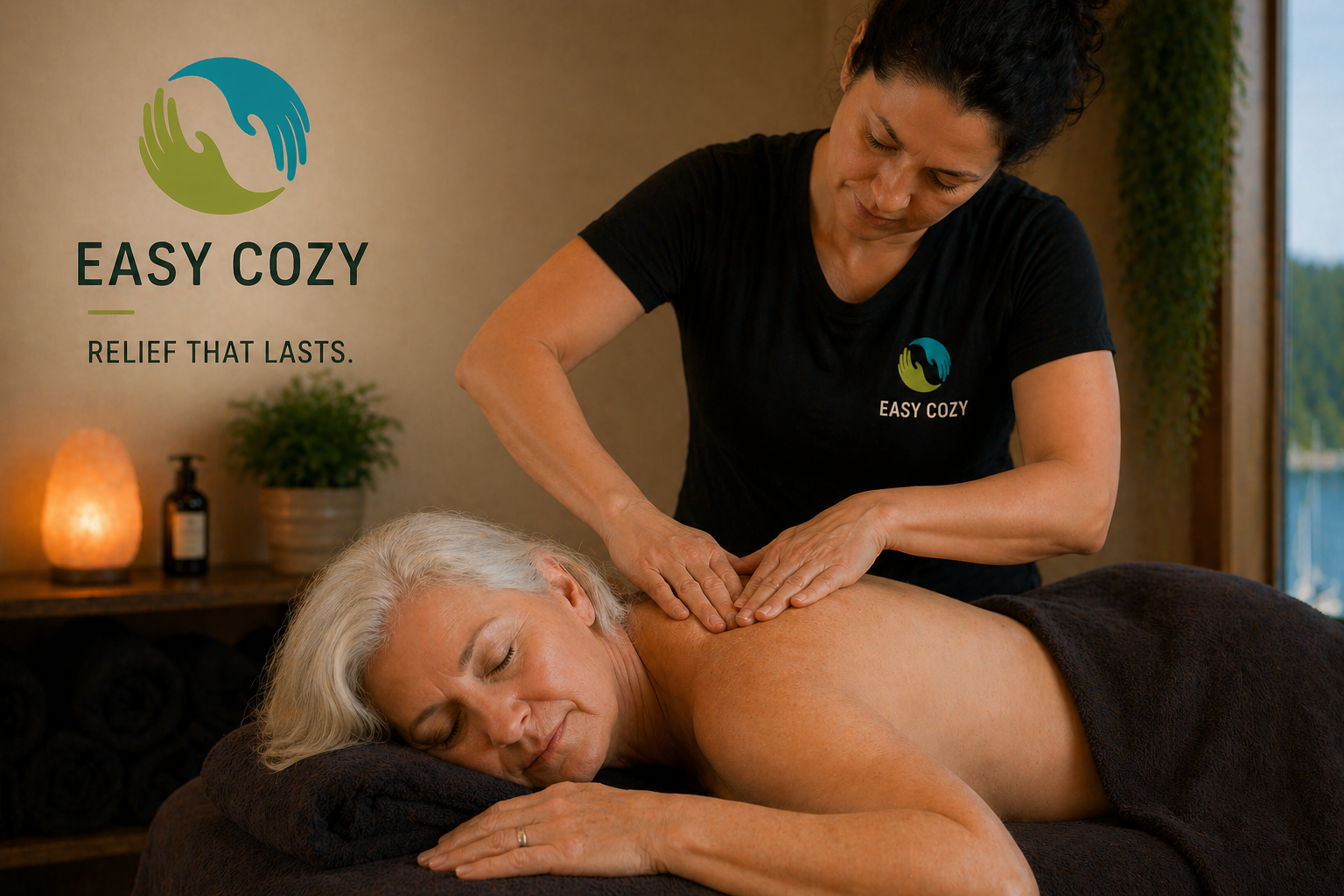
At Easy Cozy in Nanaimo, winter is one of our busiest periods for back, neck and shoulder pain. The combination of cold-weather physiological effects and reduced movement creates a significant increase in the trigger point load that most people carry. Sessions in autumn and winter often prioritise the upper trapezius, suboccipitals, and lower back erectors, as these are the areas where cold-weather tension accumulates most predictably.
According to Health Canada's guidelines on musculoskeletal pain management, regular massage therapy during the colder months is a safe and effective strategy for managing the seasonal increase in muscle pain and stiffness for adults with pre-existing musculoskeletal conditions (Government of Canada, 2024: https://www.canada.ca/en/health-canada.html). Winter tension is real, and it is very treatable. No referral needed.
Winter tension is real and very treatable. Book a session at Easy Cozy today. No referral, no waitlist.
Book Now: https://easycozy.ca/booking
Frequently asked questions
Why does cold weather make muscle pain and stiffness worse?
Cold weather increases muscle pain through five mechanisms: increased muscle viscosity from reduced tissue temperature, reduced blood circulation to peripheral muscles, elevated sympathetic nervous system tone increasing baseline muscle contraction, reduced synovial joint fluid mobility, and a lowered pain threshold from cold-activated pain receptors. People with existing trigger points or central sensitisation experience these effects most significantly.
Does cold weather cause back pain?
Cold weather does not cause back pain in people without underlying conditions, but it significantly amplifies existing muscle tension and trigger points in those who have them. The vasoconstriction, increased muscle viscosity, and elevated sympathetic tone that cold produces all increase the activity of existing trigger points and reduce the pain threshold. This is why people with back pain consistently report it as worse in winter.
How do I reduce muscle stiffness in cold weather?
Apply heat to the stiff area for 10-15 minutes before morning activity. Keep the back and neck warm with appropriate layering. Maintain movement through the winter months to preserve circulation. Warm up fully before any physical activity. Regular massage during the colder months maintains the trigger point load below the cold-weather amplification threshold.
Does massage help with cold-weather muscle pain?
Yes. Massage directly addresses the two primary drivers of cold-weather muscle pain worsening: it deactivates the trigger points that cold amplifies, and it increases local circulation in the muscles that vasoconstriction has reduced. Regular sessions through autumn and winter maintain a lower baseline trigger point load, significantly reducing the degree of cold-weather pain worsening compared to people who do not receive regular treatment.
Final Suggestion
If you’re looking for massage therapy in Nanaimo that helps you feel relaxed, refreshed, and back to your best, Easy Cozy Wellness is here to help.
We focus on real results, not just temporary relief. Whether you’re dealing with daily tension, chronic discomfort, or simply need time to unwind, our treatments are designed to support your body and your overall well-being.
We regularly help clients with:
• Back pain
• Neck pain
• Shoulder pain
• Lower back pain
• Lumbar pain
• Headaches and migraines
• Sciatic pain (sciatica)
• Hip pain
• Knee pain
• Elbow pain (tennis elbow, golfer’s elbow)
• Leg pain and muscle tightness
• Foot pain and plantar fasciitis
• Hand and wrist pain (including carpal tunnel symptoms)
• Joint pain and inflammation
• Muscle soreness and post-workout recovery
• Chronic pain conditions
• Nerve pain and tension
• Upper back and mid-back pain
• Glute pain and piriformis syndrome
• Calf tightness and strain
• Shin splints
• Ankle pain and mobility issues
• Postural pain from sitting or desk work
• Repetitive strain injuries (RSI)
• Stress, tension, and fatigue
Our services include:
• Relaxation massage
• Deep tissue massage
• Therapeutic massage
• Pain relief massage
• Stress relief treatments
• Wellness and recovery sessions
• Preventative body care
At Easy Cozy Wellness, the goal is simple. Help your body feel better, move better, and recover faster.
If you’ve been searching for:
massage therapy Nanaimo
best massage Nanaimo
affordable massage Nanaimo
deep tissue massage Nanaimo
relaxation massage Nanaimo
pain relief massage Nanaimo
wellness clinic Nanaimo
You’re in the right place.
Give us a call at 778-561-0208 and book your next wellness appointment today.
Or learn more about our deep tissue massage in Nanaimo.
We’re proud to offer a more affordable option compared to many local providers, without compromising on quality or results.
Once you experience the difference, you’ll understand why so many people choose Easy Cozy Wellness for ongoing care.
You can schedule your massage appointment here:
Relaxation is not a luxury — it’s an essential part of staying healthy and energized.
Your body will thank you. Talk soon.

