How Stress Causes Physical Pain: 6 Proven Body Mechanisms
How Stress Causes Physical Pain: 6 Proven Body Mechanisms
Stress causes physical pain through six distinct biological mechanisms, and understanding them explains why stress-related pain feels so real, so stubborn, and so unlike ordinary soreness. This is not pain that is "in your head." It is pain produced by measurable changes in muscle chemistry, nervous system activity, hormone levels, and inflammatory response.
Once you understand how each mechanism works, it becomes clear why standard pain management approaches often do not reach the root of stress-related body pain, and why targeted treatment that addresses the nervous system as well as the muscles produces a fundamentally different result.
New Blog Post
How Stress Causes Physical Pain: 6 Proven Body Mechanisms
The 6 mechanisms: how stress causes physical pain
1. Sympathetic nervous system activation
6. Sleep disruption and muscle recovery failure
Why stress pain is different from injury pain
The cumulative effect: why stress pain gets worse over time
What actually addresses stress-related physical pain
Stress and body pain treatment in Nanaimo
Can stress really cause physical pain?
How do I know if my pain is caused by stress?
The 6 mechanisms: how stress causes physical pain
The mechanisms below are well documented in clinical research. The Cleveland Clinic identifies chronic stress as a direct physiological driver of musculoskeletal pain, inflammation, and immune dysregulation, all of which contribute to the physical pain patterns described below (Cleveland Clinic, 2024: https://my.clevelandclinic.org/health/articles/stress).
1. Sympathetic nervous system activation
Stress activates the sympathetic nervous system, the fight-or-flight response. This causes muscles throughout the body to contract in preparation for action. In acute stress, this contraction resolves when the threat passes. In chronic stress, the sympathetic nervous system stays partially activated, keeping muscles in a continuous state of low-level contraction. This sustained contraction is the primary driver of stress-related muscle pain.
2. Cortisol and inflammation
Cortisol, the primary stress hormone, is anti-inflammatory in the short term but pro-inflammatory when chronically elevated. Sustained high cortisol disrupts the body's normal inflammatory regulation, allowing low-grade inflammation to persist in muscle tissue and connective tissue. This is why people under chronic stress often experience diffuse aching that does not correspond to any specific injury.
3. Trigger point development
Prolonged muscle contraction from sympathetic activation reduces blood flow through the affected muscles. Reduced blood flow means reduced oxygen delivery and reduced clearance of metabolic waste products. This creates the chemical conditions that cause trigger points, tight, hypersensitive muscle knots, to form and persist. Trigger points produce both local pain and referred pain in distant areas of the body.
4. Pain sensitisation
Chronic stress lowers the pain threshold through a process called central sensitisation. The nervous system becomes increasingly reactive to pain signals, so sensations that would previously have been filtered out as insignificant are now amplified and perceived as painful. This explains why chronic stress physical symptoms often include pain that seems disproportionate to any identifiable physical cause, the nervous system has become hypersensitive.
5. Breathing pattern changes
Stress consistently shifts breathing from slow, diaphragmatic breathing to fast, shallow chest breathing. Shallow breathing keeps the diaphragm partially contracted and causes the intercostal muscles and scalenes, the accessory breathing muscles in the neck, to work continuously. This creates chest tightness, neck tension, and a persistent sense of not being able to take a fully satisfying breath.
6. Sleep disruption and muscle recovery failure
Stress disrupts sleep, and during sleep, the body repairs and resets the muscle tissue stressed throughout the day. When sleep is compromised, this recovery process is incomplete. According to the Canadian Mental Health Association, chronic stress is one of the leading causes of sleep disturbance in adults, creating a compounding cycle where poor sleep reduces pain tolerance and increases the perception of physical symptoms (CMHA, 2024: https://cmha.ca/).
Why stress pain is different from injury pain
Injury pain has a clear cause, a clear location, and a predictable trajectory: it typically improves over days to weeks as tissue heals. Stress-related physical pain is diffuse, variable, and persistent regardless of rest. It can move around the body, worsen during stressful periods without any change in physical activity, and improve during relaxed periods without any specific treatment.
Understanding this distinction is important because the treatment approaches are different. Injury pain responds to rest and protection of the damaged tissue. Stress-related muscle tension symptoms respond to interventions that address both the muscle tissue and the nervous system activation driving the tension, which is why massage and acupressure, which work on both simultaneously, are particularly effective for this presentation.
The cumulative effect: why stress pain gets worse over time
Each of the six mechanisms above feeds the others. Sympathetic activation creates trigger points. Trigger points create pain. Pain signals increase cortisol. Elevated cortisol sustains sympathetic activation and disrupts sleep. Disrupted sleep increases pain sensitivity. Increased pain sensitivity makes existing trigger points more painful. The cycle compounds.
This is why psychological stress and body pain tends to escalate over months rather than resolve. Without direct intervention breaking at least one link in this chain, the pattern typically worsens.
What actually addresses stress-related physical pain
Parasympathetic activation: practices that activate the rest-and-digest response, slow breathing, progressive muscle relaxation, directly counter the sympathetic activation driving the pain.
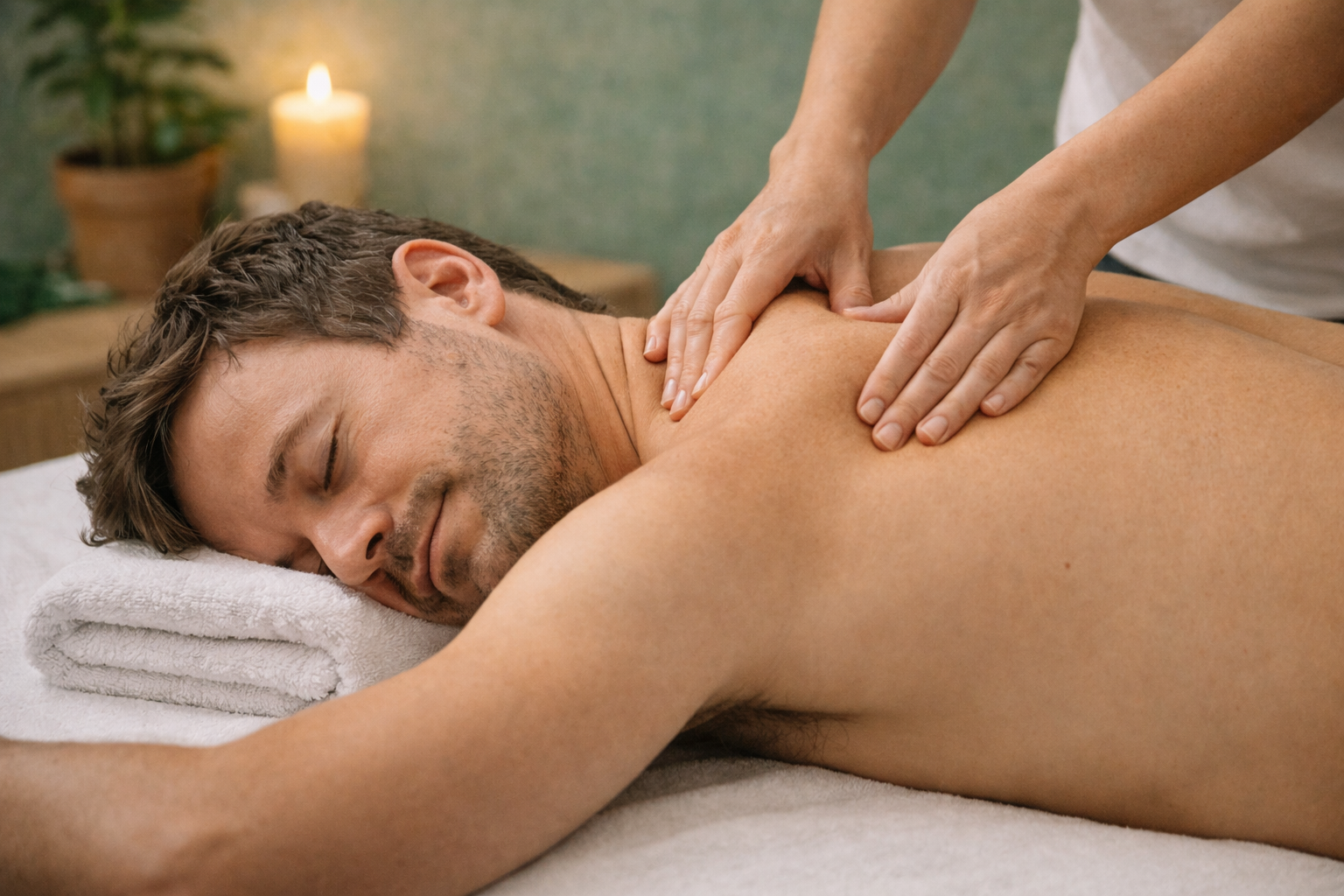
Targeted massage and acupressure: hands-on treatment addresses the trigger points and fascial restrictions while simultaneously activating the parasympathetic nervous system through the relaxation response.
Sleep prioritisation: addressing the sleep disruption component interrupts the recovery failure that allows tension to compound night after night.
Movement: regular gentle movement maintains blood flow to muscle tissue and reduces the metabolic waste accumulation that drives trigger point formation.
The combination of massage and acupressure is particularly effective for how does stress affect your muscles, because it addresses the tissue-level tension (through massage) and the nervous system activation (through acupressure points that influence parasympathetic tone) in a single treatment. For better sleep alongside stress-related pain, see the research on massage and sleep quality.
Stress and body pain treatment in Nanaimo
Stress-related body pain is one of the most frequently treated conditions at Easy Cozy in Nanaimo. Clients often arrive having managed the pain with rest, heat and over-the-counter medication, approaches that address the symptom without reaching the mechanism. The combination of can stress cause muscle pain awareness and targeted treatment that addresses both the muscle tissue and nervous system component produces a qualitatively different and more lasting result.
Sessions addressing stress-related pain at Easy Cozy combine deep tissue massage on the primary tension storage sites, upper trapezius, lower back, hips, with acupressure on the nervous system points that reduce sympathetic tone and activate the parasympathetic response. According to Health Canada, massage therapy is a recognised intervention for stress-related musculoskeletal pain, with benefits extending to sleep quality and anxiety reduction alongside the physical pain relief (Government of Canada, 2024: https://www.canada.ca/en/health-canada.html). No referral needed, no waitlist.
Now that you understand the mechanisms driving your pain, the next step is clear. Book a session at Easy Cozy, we treat the source, not just the symptom.
Book Now: https://easycozy.ca/booking
Frequently asked questions
Can stress really cause physical pain?
Yes, stress causes physical pain through six distinct mechanisms: sympathetic nervous system activation contracting muscles, cortisol-driven inflammation, trigger point formation from reduced blood flow, central pain sensitisation, breathing pattern changes, and sleep disruption preventing muscle recovery. Each mechanism is measurable and well documented in clinical research. Stress-related pain is physiologically real, not psychosomatic.
How do I know if my pain is caused by stress?
Stress-related pain tends to be diffuse rather than localised, variable rather than consistent, and worsens during stressful periods without any change in physical activity. It often appears in the neck, upper shoulders, lower back and hips simultaneously. Unlike injury pain, it does not have a clear onset event and does not follow a straightforward recovery trajectory. If your pain fits this pattern and you are under chronic stress, stress is likely contributing.
How long does stress-related muscle pain last?
Without treatment, stress-related muscle pain tends to persist and worsen as long as the underlying stress continues and the muscle patterns remain unaddressed. With targeted treatment addressing both the muscle tension and the nervous system component, most people notice meaningful improvement within one to three sessions. Addressing the underlying stress source simultaneously produces the most sustained result.
Does massage help with stress-related body pain?
Yes, massage is particularly effective for stress-related body pain because it addresses both dimensions simultaneously. Deep tissue massage releases the trigger points and fascial restrictions created by chronic muscle contraction. Acupressure activates the parasympathetic nervous system, directly reducing the sympathetic activation that is driving the tension. This dual action produces results that neither rest nor stress management alone can achieve.
Final Suggestion
If you’re looking for massage therapy in Nanaimo that helps you feel relaxed, refreshed, and back to your best, Easy Cozy Wellness is here to help.
We focus on real results, not just temporary relief. Whether you’re dealing with daily tension, chronic discomfort, or simply need time to unwind, our treatments are designed to support your body and your overall well-being.
We regularly help clients with:
Sciatic pain (sciatica)
Hip pain
Knee pain
Elbow pain (tennis elbow, golfer’s elbow)
Leg pain and muscle tightness
Foot pain and plantar fasciitis
Hand and wrist pain (including carpal tunnel symptoms)
Joint pain and inflammation
Muscle soreness and post-workout recovery
Chronic pain conditions
Nerve pain and tension
Upper back and mid-back pain
Glute pain and piriformis syndrome
Calf tightness and strain
Shin splints
Ankle pain and mobility issues
Postural pain from sitting or desk work
Repetitive strain injuries (RSI)
Stress, tension, and fatigue
Our services include:
Relaxation massage
Deep tissue massage
Therapeutic massage
Pain relief massage
Stress relief treatments
Wellness and recovery sessions
Preventative body care
At Easy Cozy Wellness, the goal is simple. Help your body feel better, move better, and recover faster.
If you’ve been searching for:
massage therapy Nanaimo
best massage Nanaimo
affordable massage Nanaimo
deep tissue massage Nanaimo
relaxation massage Nanaimo
pain relief massage Nanaimo
wellness clinic Nanaimo
You’re in the right place.
Give us a call at 778-561-0208 and book your next wellness appointment today.
Or visit https://easycozy.ca/ to learn more about our services, see current offers, and review our satisfaction guarantee.
We’re proud to offer a more affordable option compared to many local providers, without compromising on quality or results.
Once you experience the difference, you’ll understand why so many people choose Easy Cozy Wellness for ongoing care.
You can schedule your massage appointment here:
Relaxation is not a luxury — it’s an essential part of staying healthy and energized.
Your body will thank you. Talk soon.

