Tension Headaches From Neck Pain: 5 Causes and Proven Relief
Tension Headaches From Neck Pain: 5 Causes and Proven Relief
Tension headaches from neck pain are not really head problems. They are neck muscle problems that happen to produce pain in the head. Understanding this distinction changes everything about how they are treated, and why the common approaches of pain medication and lying down in a dark room provide temporary relief but do not stop the headaches from returning.
The pain you feel in your temples, forehead, or the back of your skull is referred pain from muscles and connective tissue in your neck. This post explains the five specific structures responsible, the mechanism of referral, and what treatment actually addresses the source.
The 5 causes of tension headaches from neck pain
The Cleveland Clinic identifies the suboccipital muscles, upper trapezius and cervical facet joints as the primary sources of headache pain that originates from the neck, a condition known as cervicogenic headache, which accounts for up to 20% of all headaches presenting to clinicians (Cleveland Clinic, 2024: https://my.clevelandclinic.org/health/diseases/9639-tension-type-headaches).
1. Suboccipital muscle trigger points
The suboccipital muscles, four small muscles at the base of the skull, are one of the most potent headache generators in the body. When they develop trigger points from sustained forward head posture or screen use, they refer pain in a characteristic pattern: behind the eyes, across the forehead, and into the temple. This is the pattern most people describe as a tension headache, and it is driven entirely from the base of the skull.
2. Upper trapezius trigger points
The upper trapezius, when loaded with trigger points from sustained shoulder elevation or stress, refers pain upward into the temporal region, the side of the head above the ear. This produces the unilateral headache that people often describe as feeling like pressure inside the skull. The trigger point can be located in the shoulder, but the pain is felt entirely in the head.
3. Sternocleidomastoid (SCM) referral
The sternocleidomastoid (SCM), the prominent muscle running from behind the ear to the collarbone, is a major but often overlooked source of tension headaches. When the SCM develops trigger points, commonly due to forward head posture, prolonged screen use, or stress-related muscle guarding, it can refer pain in complex patterns across the head. This includes pain behind the eyes, across the forehead, into the temples, and even around the ear or jaw. Unlike typical muscle soreness, SCM-related pain often feels diffuse and hard to pinpoint, which is why it is frequently mistaken for sinus headaches or migraines. Without direct treatment to release these trigger points, the referral pattern continues, reinforcing the cycle of recurring tension headaches.
4. Cervical facet joint irritation
The facet joints at C2-C3 in the cervical spine are directly connected to the headache pain pathways through the trigeminal nucleus. When these joints are irritated, from sustained posture, acute injury, or cumulative loading, they produce headache pain referred into the upper neck and back of the skull. According to Physiopedia, C2-C3 facet joint involvement is present in approximately 70% of cervicogenic headaches (Physiopedia, 2024: https://www.physio-pedia.com/Cervicogenic_Headache).
5. Posterior scalene tension
The scalene muscles in the side of the neck help elevate the first rib during breathing and support the neck during movement. When stressed or overloaded, they develop trigger points that refer pain along the side of the head and into the ear. Scalene trigger points are particularly common in people who breathe with their upper chest rather than their diaphragm, a pattern strongly associated with chronic stress.
How neck muscles cause head pain: the referral mechanism
Referred pain occurs when a trigger point in one structure generates pain that is perceived in a distant area. The mechanism is neurological: the sensory nerves from the neck share pathways with the sensory nerves from the head and face in the brainstem. When neck muscle trigger points generate sustained nociceptive input, the brain interprets some of that signal as coming from the head.
This is why pressing on a trigger point in the upper trapezius can reproduce or intensify neck pain causing headaches, because the trigger point is the actual pain generator. Treating the trigger point removes the source, and the referred head pain resolves with it.
Cervicogenic headache vs tension headache: what is the difference
For most people experiencing headaches at the back of the head from neck pain, the practical treatment approach is the same regardless of the clinical classification: identify and deactivate the specific trigger points generating the referred pain. The NHS guidance on tension-type headaches acknowledges that many cases have a significant musculoskeletal component that responds to manual therapy, particularly when neck stiffness and tenderness are present alongside the headache (NHS, 2024: https://www.nhs.uk/conditions/tension-headaches/).
What actually provides lasting relief
Suboccipital release: direct pressure deactivation of suboccipital trigger points, the single highest-impact intervention for posterior headaches referred from the neck.
Upper trapezius massage and acupressure: targeting the temple and temporal headache pattern.
SCM release: for frontal, eye-area and sinus-type headaches with a neck component.
Chin tuck exercises: repositioning the head over the shoulders reduces the forward head load that is maintaining the suboccipital and SCM trigger points.
Screen positioning correction: raising the screen to eye level is the most impactful long-term change for people whose headaches are screen-work related.
Massage and acupressure targeting the specific muscles listed above produce significantly faster and more sustained neck tension headache relief than pain medication or rest. Medication manages the pain signal. Deactivating the trigger points removes the signal generator.
When to see a doctor about your headaches
Neck-related headaches that respond to posture correction and massage are very safe to treat with manual therapy. However, some headache presentations require urgent medical assessment:
Sudden-onset severe headache unlike any previous headache, seek emergency assessment immediately
Headache accompanied by fever, stiff neck and light sensitivity, may indicate meningitis
Headache accompanied by visual disturbance, slurred speech or weakness in one side of the body
Headaches that are consistently waking you from sleep
Progressive headaches becoming more frequent and severe without a clear cause
If none of those apply and your headaches are the familiar desk-related or stress-related pattern, targeted massage is an appropriate and effective first treatment.
Neck-related headache treatment in Nanaimo
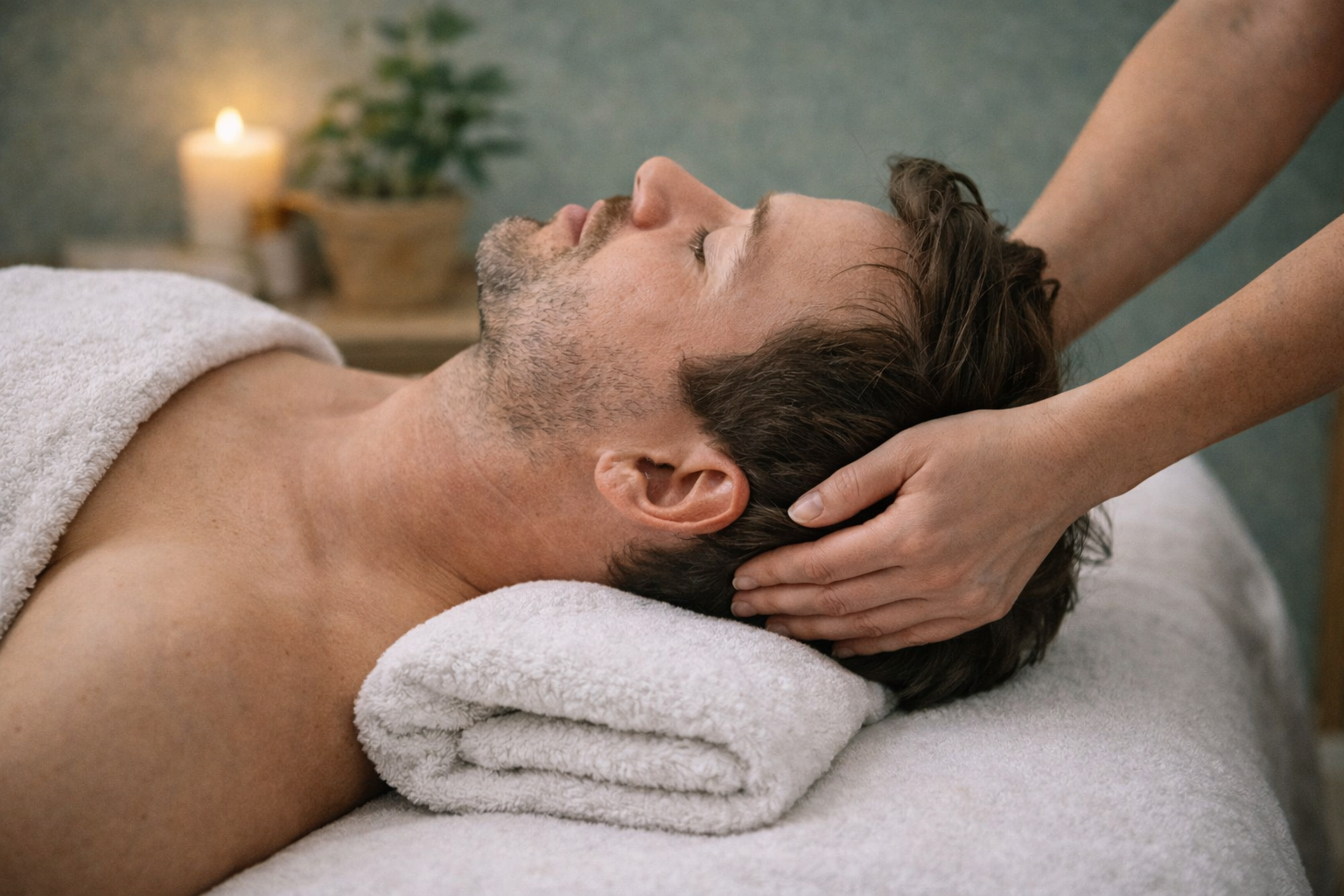
Tension headaches with a cervical origin are one of the most frequently treated conditions at Easy Cozy in Nanaimo. The assessment identifies which of the five structures is generating the referred head pain, suboccipitals, upper trapezius, SCM, cervical facets or scalenes, and treatment is directed specifically at those structures.
The acupressure component is particularly effective for suboccipital and SCM trigger points that produce the most common types of tension headache. Many clients who have managed their headaches with medication for months find that two to three targeted sessions produce a significant reduction in headache frequency, not just pain management, but fewer headaches overall as the trigger points resolve.
Now that you understand exactly what is causing your headaches, the next step is targeted treatment. Book a session at Easy Cozy, we will identify the specific muscles and treat the real source.
Book Now: https://easycozy.ca/booking
Frequently asked questions
Can neck pain cause tension headaches?
Yes, neck pain is one of the most common causes of tension headaches. Trigger points in the suboccipital muscles, upper trapezius, SCM and scalenes all refer pain into the head in specific, predictable patterns. These are not vascular headaches originating in the brain. They are referred pain from neck and shoulder muscles that can be identified by palpation and treated directly.
How do I get rid of a tension headache caused by neck pain?
For immediate relief, apply gentle pressure to the suboccipital muscles at the base of the skull, the area just below the bony ridge at the back of the head. Sustained, gentle pressure for 60-90 seconds can reduce suboccipital trigger point activity and relieve the referred headache. Chin tucks, gently retracting the chin straight back, reduce the forward head load maintaining the trigger points. For lasting relief, targeted massage deactivating the specific trigger points is significantly more effective than either technique alone.
How long do tension headaches from neck pain last?
Without treatment, tension headaches driven by neck trigger points persist as long as the trigger points remain active, which can be indefinitely if the posture or activities maintaining them do not change. With targeted trigger point treatment, most people notice a significant reduction in headache frequency within one to two sessions. Complete resolution of the neck-headache pattern typically takes two to four sessions for most people.
Why do I get headaches at the back of my head from neck pain?
Headaches at the back of the skull from neck pain are almost always generated by suboccipital trigger points. The suboccipital muscles, when overloaded by forward head posture or sustained screen use, refer pain in a band across the back of the skull and into the temple. This is the most common neck-headache pattern and responds well to direct suboccipital release through massage or acupressure.
Final Suggestion
If you’re looking for massage therapy in Nanaimo that helps you feel relaxed, refreshed, and back to your best, Easy Cozy Wellness is here to help.
We focus on real results, not just temporary relief. Whether you’re dealing with daily tension, chronic discomfort, or simply need time to unwind, our treatments are designed to support your body and your overall well-being.
We regularly help clients with:
Sciatic pain (sciatica)
Hip pain
Knee pain
Elbow pain (tennis elbow, golfer’s elbow)
Leg pain and muscle tightness
Foot pain and plantar fasciitis
Hand and wrist pain (including carpal tunnel symptoms)
Joint pain and inflammation
Muscle soreness and post-workout recovery
Chronic pain conditions
Nerve pain and tension
Upper back and mid-back pain
Glute pain and piriformis syndrome
Calf tightness and strain
Shin splints
Ankle pain and mobility issues
Postural pain from sitting or desk work
Repetitive strain injuries (RSI)
Stress, tension, and fatigue
Our services include:
Relaxation massage
Deep tissue massage
Therapeutic massage
Pain relief massage
Stress relief treatments
Wellness and recovery sessions
Preventative body care
At Easy Cozy Wellness, the goal is simple. Help your body feel better, move better, and recover faster.
If you’ve been searching for:
massage therapy Nanaimo
best massage Nanaimo
affordable massage Nanaimo
deep tissue massage Nanaimo
relaxation massage Nanaimo
pain relief massage Nanaimo
wellness clinic Nanaimo
You’re in the right place.
Give us a call at 778-561-0208 and book your next wellness appointment today.
Or visit https://easycozy.ca/ to learn more about our services, see current offers, and review our satisfaction guarantee.
We’re proud to offer a more affordable option compared to many local providers, without compromising on quality or results.
Once you experience the difference, you’ll understand why so many people choose Easy Cozy Wellness for ongoing care.
You can schedule your massage appointment here:
Relaxation is not a luxury — it’s an essential part of staying healthy and energized.
Your body will thank you. Talk soon.

