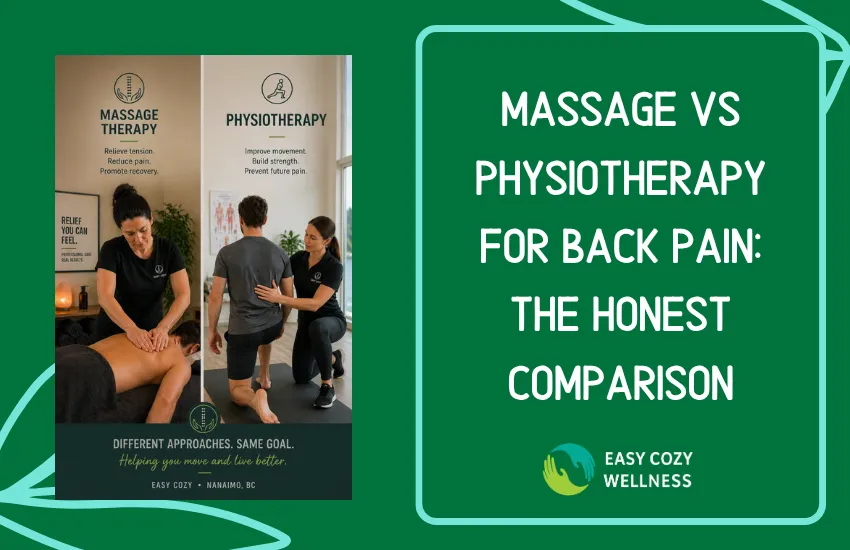
Massage vs Physiotherapy for Back Pain: The Honest Comparison
Massage vs Physiotherapy for Back Pain: The Honest Comparison
Massage vs physiotherapy for back pain is a genuine question that deserves a genuine answer — not a sales pitch from a massage practice that reflexively recommends massage for everything. The honest answer: both can be highly effective, they address different components of back pain, and the right choice depends on your specific presentation. For most non-specific lower back pain, massage is the more direct first-line treatment. For back pain with a significant rehabilitation or progressive exercise component, physiotherapy is more appropriate.
This post explains exactly what each does, what the evidence shows, and the specific situations where each is the better choice.
Table of contents
1. What each option actually does for back pain
2. Key differences: massage vs physiotherapy for back pain
3. What the evidence shows
4. Who should choose massage first
5. Who should choose physiotherapy first
6. When both are needed simultaneously
7. Our honest recommendation
8. Back pain treatment in Nanaimo
9. Frequently asked questions
What each option actually does for back pain
Massage therapy
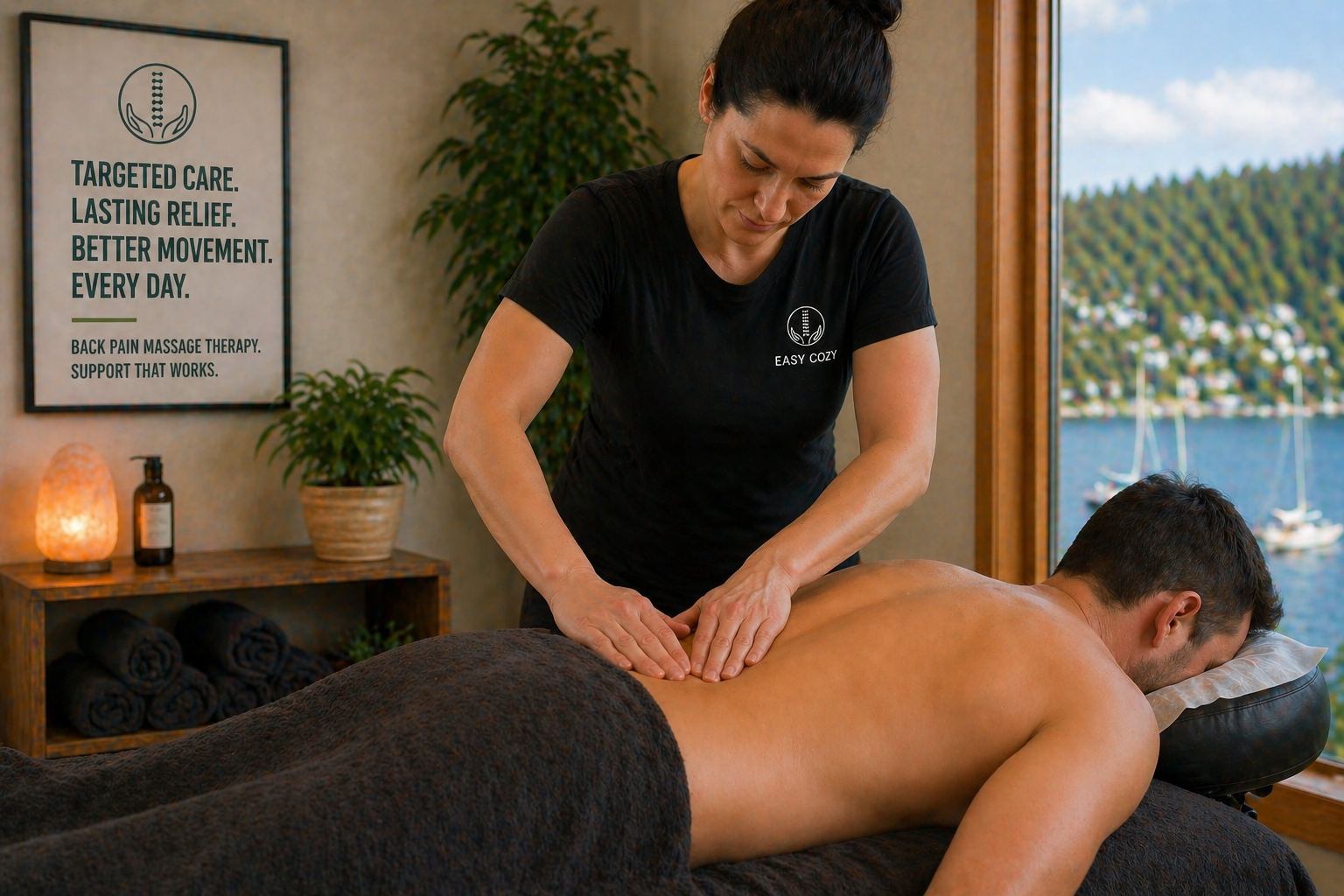
Massage therapy works directly on soft tissue: muscles, fascia, and connective tissue. For back pain, this means deactivating trigger points in the lumbar erectors, QL, piriformis and hip flexors; releasing fascial restrictions; increasing local blood flow; and activating the parasympathetic nervous system to reduce the pain sensitisation component of chronic back pain. It produces fast relief for myofascial back pain because it addresses the tissue-level drivers directly.
What massage does not do: prescribe progressive rehabilitation exercises, treat structural pathology such as disc herniation or spinal stenosis directly, or provide the supervised movement retraining that some people need after injury or surgery.
Physiotherapy
Physiotherapy's primary tool for back pain is exercise: progressive loading programs designed to restore function, movement, and load tolerance. It also includes manual therapy — joint mobilisation, some soft tissue work — but the rehabilitation exercise component is the core of most physiotherapy programs. Physiotherapy is most appropriate when the treatment goal is restoring movement capacity after injury, managing a structural condition requiring specific loading modification, or addressing chronic pain through graded exercise.
What physiotherapy is less well-suited for: providing fast relief from acute myofascial back pain; treating the specific trigger points that are the primary driver of most non-specific lower back pain; addressing the stress-driven sympathetic activation component of back pain.
Key differences: massage vs physiotherapy for back pain
Primary target: massage targets muscle and fascia; physiotherapy targets movement capacity and functional restoration.
Speed of relief: massage typically produces faster pain relief for myofascial back pain; physiotherapy produces progressive improvement over weeks.
Access: both are typically available without GP referral in Canada; massage is generally available more quickly.
Cost: both are typically out-of-pocket without specific coverage; per-session costs are broadly comparable.
Approach: massage is practitioner-led passive treatment; physiotherapy includes a significant active exercise component.
What the evidence shows
According to Physiopedia, both massage therapy and physiotherapy have strong evidence supporting their use for non-specific lower back pain. Meta-analyses consistently show massage produces greater short-term pain relief than no treatment or usual care, and that physiotherapy exercise programs produce greater long-term functional improvement in people with significant movement limitations.
The NHS back pain guidelines recommend both massage and physiotherapy as components of an evidence-based treatment approach, noting that the combination of manual therapy (which includes massage) and exercise produces better outcomes than either alone for persistent non-specific back pain (NHS, 2024: https://www.nhs.uk/conditions/back-pain/).
The key phrase is "non-specific." For physiotherapy vs massage therapy for lower back pain that has a clear structural cause — disc herniation with neurological symptoms, post-surgical rehabilitation — physiotherapy is the more targeted choice. For non-specific lower back pain driven primarily by muscle tension, trigger points, and poor ergonomics, massage is more directly matched.
Who should choose massage first
Back pain from desk work, poor posture, or sustained sitting
Recurring back pain with established trigger points in the lumbar erectors, QL or hip flexors
Back pain that is worse at the end of the day and improves with rest
Back pain associated with stress or anxiety
Back pain without neurological symptoms (no leg weakness, numbness or tingling)
People who want fast relief and can move normally through daily activities
Who should choose physiotherapy first
Back pain following surgery or a significant injury requiring rehabilitation
Back pain with confirmed structural pathology (disc herniation, spondylolisthesis) that requires specific loading guidance
Back pain with significant movement limitations — difficulty standing, sitting, or walking
Back pain with neurological symptoms — weakness, numbness or tingling in the legs
People whose primary goal is returning to a specific sport, activity, or physical occupation
When both are needed simultaneously
Some back pain presentations benefit from both at the same time. A person with chronic non-specific lower back pain who also has reduced hip mobility and movement confidence benefits from massage (addressing the trigger points and myofascial component) combined with physiotherapy (progressive loading and movement retraining). For back pain massage vs physio which is better in these presentations — neither alone is the most complete answer.
The sequential approach also works well: massage first to reduce pain and release the soft tissue restrictions, then physiotherapy to address the movement and strengthening component once the tissue is more receptive.
Our honest recommendation
Most non-specific lower back pain — which represents approximately 85% of all back pain presentations — is primarily driven by myofascial triggers, poor ergonomics, and postural loading. Massage is more directly targeted at these drivers than physiotherapy's exercise-based approach. The evidence for massage producing faster short-term relief is strong. The evidence for physiotherapy producing better long-term functional outcomes in people with movement limitations is also strong.
For people asking should I see a physiotherapist or massage therapist for back pain without specific neurological symptoms or movement limitations: start with massage. If the response is not what you expected after 3-4 sessions, physiotherapy assessment is the appropriate next step. According to Health Canada's evidence review, massage therapy is identified as a safe and effective first-line intervention for non-specific back pain, with a recommendation for consideration before more complex interventions (Government of Canada, 2024: https://www.canada.ca/en/health-canada.html).
Back pain treatment in Nanaimo
At Easy Cozy in Nanaimo, when a client's presentation suggests that physiotherapy exercise is more appropriate than massage — a significant movement limitation, post-surgical rehabilitation, or a structural component that massage cannot address — we say so. We refer clients onward rather than keeping them in sessions that are not the right fit.
For the majority of non-specific lower back pain presentations we see, targeted massage addressing the specific trigger points and myofascial restrictions involved produces faster and more immediate relief than the exercise-based physiotherapy approach. No referral needed, no waitlist. Most sessions available within the same week.
Try massage first — book a session at Easy Cozy today. If massage is not the right fit for your presentation, we will tell you that in the first session. No referral, no commitment.
Book Now: https://easycozy.ca/booking
Frequently asked questions
Is massage or physiotherapy better for back pain?
For most non-specific lower back pain driven by muscle tension, trigger points, and poor ergonomics, massage produces faster and more direct relief. For back pain involving significant movement limitations, neurological symptoms, or post-surgical rehabilitation, physiotherapy is more appropriate. The right choice depends on the specific presentation — both have strong evidence, they address different components of back pain.
Can massage replace physiotherapy for back pain?
Massage replaces physiotherapy for the myofascial component of back pain — muscle tension, trigger points, fascial restrictions — where it is often more effective. It does not replace physiotherapy for the rehabilitation and progressive loading component needed after injury or surgery, or for back pain with confirmed structural pathology requiring specific exercise modification. For most desk-related and non-specific back pain, massage addresses the primary drivers without the need for physiotherapy.
What does physiotherapy do for back pain that massage does not?
Physiotherapy provides progressive rehabilitation exercises that restore load tolerance, movement confidence, and functional capacity after injury. It addresses the active, movement-based component of recovery that massage cannot. Physiotherapy also manages structural conditions that require specific loading guidelines — disc herniations, spinal stenosis — through targeted exercise programming. These are the situations where physiotherapy is the more appropriate choice.
How do I know if I need massage or physiotherapy for back pain?
Choose massage first if your back pain is from desk work, posture, stress or recurring episodes without neurological symptoms. Choose physiotherapy first if your back pain follows a significant injury, involves leg weakness or numbness, significantly limits your movement, or has been assessed as having a structural component requiring specific rehabilitation. If you are unsure, a single session at Easy Cozy includes an assessment that will clarify which approach is more appropriate for your presentation.
Final Suggestion
If you’re looking for massage therapy in Nanaimo that helps you feel relaxed, refreshed, and back to your best, Easy Cozy Wellness is here to help.
We focus on real results, not just temporary relief. Whether you’re dealing with daily tension, chronic discomfort, or simply need time to unwind, our treatments are designed to support your body and your overall well-being.
We regularly help clients with:
• Back pain
• Neck pain
• Shoulder pain
• Lower back pain
• Lumbar pain
• Headaches and migraines
• Sciatic pain (sciatica)
• Hip pain
• Knee pain
• Elbow pain (tennis elbow, golfer’s elbow)
• Leg pain and muscle tightness
• Foot pain and plantar fasciitis
• Hand and wrist pain (including carpal tunnel symptoms)
• Joint pain and inflammation
• Muscle soreness and post-workout recovery
• Chronic pain conditions
• Nerve pain and tension
• Upper back and mid-back pain
• Glute pain and piriformis syndrome
• Calf tightness and strain
• Shin splints
• Ankle pain and mobility issues
• Postural pain from sitting or desk work
• Repetitive strain injuries (RSI)
• Stress, tension, and fatigue
Our services include:
• Relaxation massage
• Deep tissue massage
• Therapeutic massage
• Pain relief massage
• Stress relief treatments
• Wellness and recovery sessions
• Preventative body care
At Easy Cozy Wellness, the goal is simple. Help your body feel better, move better, and recover faster.
If you’ve been searching for:
massage therapy Nanaimo
best massage Nanaimo
affordable massage Nanaimo
deep tissue massage Nanaimo
relaxation massage Nanaimo
pain relief massage Nanaimo
wellness clinic Nanaimo
You’re in the right place.
Give us a call at 778-561-0208 and book your next wellness appointment today.
Or learn more about our back pain massage in Nanaimo.
We’re proud to offer a more affordable option compared to many local providers, without compromising on quality or results.
Once you experience the difference, you’ll understand why so many people choose Easy Cozy Wellness for ongoing care.
You can schedule your massage appointment here:
Relaxation is not a luxury — it’s an essential part of staying healthy and energized.
Your body will thank you. Talk soon.

