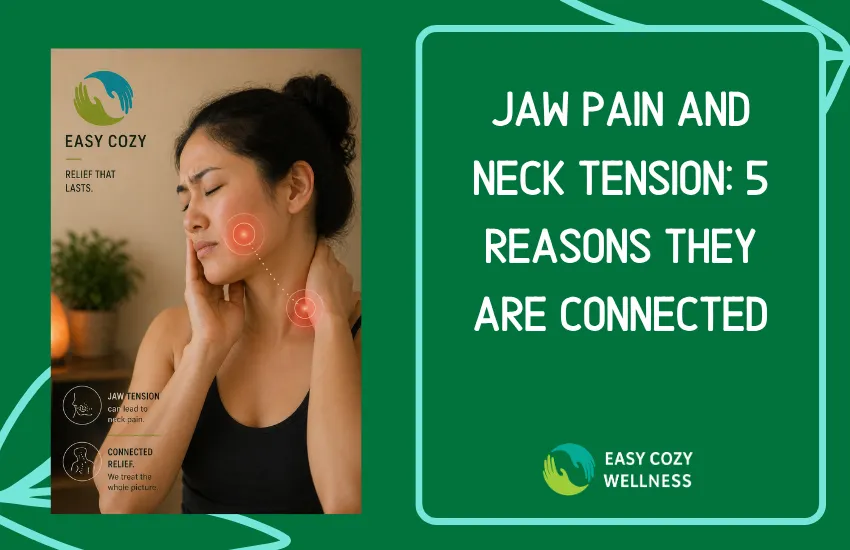
Jaw Pain and Neck Tension: 5 Reasons They Are Connected
Jaw Pain and Neck Tension: 5 Reasons They Are Connected
Jaw pain and neck tension share a direct anatomical and neurological connection, and people who experience both simultaneously are usually dealing with the same underlying pattern expressed in two locations. The jaw and neck are linked through shared muscle attachments, shared fascial pathways, and a shared neural processing centre in the brainstem. Understanding this connection explains why treating only the neck when jaw tension is present consistently produces incomplete results.
This post explains the five specific mechanisms connecting jaw and neck pain, which muscles are involved, and what treatment addresses both structures effectively.
Table of contents
1. The anatomical link between the jaw and neck
2. The 5 reasons jaw pain and neck tension are connected
3. How to tell if your neck tension has a jaw component
4. What treatment addresses both jaw and neck tension
5. Jaw and neck pain treatment in Nanaimo
6. Frequently asked questions
The anatomical link between the jaw and neck
The jaw and neck share several structural connections that make them functionally inseparable in the context of pain and tension. The most important is the trigeminal-cervical nucleus: a region in the brainstem where sensory information from the jaw, face, and upper cervical spine converges. Pain signals from jaw structures and from the upper cervical joints are processed in the same location, which means pain originating in one area is frequently perceived in the other.
According to the Cleveland Clinic, the convergence of jaw and cervical pain pathways in the trigeminal-cervical nucleus is the primary reason that temporomandibular joint (TMJ) disorders so consistently produce neck and shoulder symptoms, and why cervical musculoskeletal conditions so frequently include jaw pain and facial tension as secondary complaints (Cleveland Clinic, 2024: https://my.clevelandclinic.org/health/diseases/15068-temporomandibular-disorders-tmd-overview).
The 5 reasons jaw pain and neck tension are connected
1. The masseter-SCM fascial connection
The masseter muscle, which closes the jaw, is connected through the superficial cervical fascia to the sternocleidomastoid (SCM). When the masseter tightens from jaw clenching or bruxism (teeth grinding), the tension transmits directly to the SCM through this fascial pathway. This produces the characteristic tight sensation running from the jaw angle down the side of the neck into the collarbone that many people with jaw clenching habits experience.
2. Suboccipital overload from jaw position
The suboccipital muscles, which control fine head movement and maintain the skull-atlas relationship, are neurologically linked to the jaw muscles through the trigeminal system. When the jaw is held in a clenched or protruded position, the suboccipitals reflexively activate to counterbalance the altered head position. This sustained suboccipital activation produces the base-of-skull tension and occipital headaches that frequently accompany jaw clenching and neck pain.
3. Neck muscle bracing as a stress response
Jaw clenching is primarily a stress response. The same sympathetic nervous system activation that drives jaw clenching also activates the upper trapezius, levator scapulae and SCM through the same fight-or-flight bracing mechanism. This is why TMJ and neck tension consistently co-occur during stressful periods: they are two expressions of the same underlying sympathetic activation, not two independent problems.
4. Cervical joint loading from altered jaw position
The jaw and the upper cervical vertebrae are closely related in position. When the jaw is habitually held forward or to one side, the skull must compensate by repositioning on the cervical spine, which alters the loading across the C1-C2 joint. Sustained altered cervical joint loading produces facet irritation and the referred head and neck pain patterns associated with cervicogenic headache.
5. Referred pain from TMJ structures to the neck
The TMJ capsule and surrounding ligaments, when irritated, refer pain in predictable patterns: into the temple, the cheek, the ear, and down the side of the neck. Many people with TMJ irritation describe a soreness running from the jaw down into the upper shoulder on the same side, without realising the jaw is the source. Jaw and neck pain on the same side is the classic presentation of this referral pattern and is one of the most useful indicators that jaw treatment is needed alongside neck treatment. [related reading: tight neck on one side]
How to tell if your neck tension has a jaw component
The following indicators suggest a jaw component in neck tension:
Neck tension is consistently worse on waking, particularly if you grind or clench teeth during sleep.
The tension is located on one side only and runs from the jaw angle down into the upper shoulder.
You notice jaw soreness, clicking, or limited mouth opening alongside the neck tension.
Your neck tension worsens during periods of high stress even without changes in physical activity or desk work.
Massage of the neck provides temporary relief but the tension returns within a day or two, suggesting an upstream driver not being addressed.
According to Physiopedia, the co-occurrence of cervical and jaw musculoskeletal disorders is well established in the literature, with research consistently showing that treating both the cervical and mandibular components produces significantly better outcomes than treating either in isolation.
What treatment addresses both jaw and neck tension
For the jaw component
Masseter release: sustained pressure on the masseter bilaterally reduces the jaw muscle tension that is transmitting into the neck through the fascial pathway.
Temporal muscle release: the temporalis muscle at the side of the skull is frequently overtight from jaw clenching and contributes to temporal headaches and jaw tension.
Jaw awareness: checking jaw position throughout the day and maintaining teeth slightly apart with the tongue resting on the roof of the mouth. This is the most impactful daytime habit change.
Night guard consideration: for nocturnal bruxism, a dental night guard reduces the loading on the jaw joints and muscles during sleep.
For the neck component
SCM and suboccipital release: the primary muscles overloaded by the jaw-neck connection, requiring targeted manual therapy.
Upper trapezius and levator release: the secondary muscles bracing as part of the shared sympathetic stress response.
Stress management: addressing the sympathetic activation that is driving both the jaw clenching and the neck bracing simultaneously.
The combination of masseter and cervical treatment in a single session produces faster resolution of both components than treating either alone, because it addresses all three pathways connecting them: fascial, neurological, and stress-mediated.
Jaw and neck pain treatment in Nanaimo
At Easy Cozy in Nanaimo, the jaw-neck connection is assessed routinely when clients present with persistent neck tension that has not fully responded to direct neck treatment. Many clients who have been treating their neck tension for months without lasting results find that adding masseter and temporal release to the cervical work produces the missing component of the resolution.
Sessions addressing the jaw-neck connection combine SCM, suboccipital and upper trapezius work with masseter and temporal release where indicated. According to the NHS guidance on jaw and neck conditions, manual therapy addressing both the cervical and mandibular musculature is an evidence-supported approach for presentations where the two are clinically linked (NHS, 2024: https://www.nhs.uk/conditions/neck-pain-and-stiff-neck/). No referral needed.
Now that you understand why your jaw and neck tension are connected, the next step is treatment that addresses both. Book a session at Easy Cozy.
Book Now: https://easycozy.ca/booking
Frequently asked questions
Can jaw tension cause neck pain?
Yes, through five mechanisms: the masseter-SCM fascial connection transmitting jaw tension into the neck, suboccipital overload from jaw position, shared sympathetic nervous system activation driving both simultaneously, cervical joint loading from altered jaw position, and TMJ referral pain running into the neck. Both conditions consistently co-occur and respond better to combined treatment than to treating either in isolation.
Why do I have jaw pain and neck pain on the same side?
Same-side jaw and neck pain is the classic presentation of TMJ referral into the cervical region. The TMJ and surrounding ligaments refer pain down the side of the neck on the same side as the jaw issue. The masseter-SCM fascial connection also runs ipsilaterally, meaning jaw tension on the right side primarily loads the right SCM. If your jaw and neck pain are consistently on the same side, the jaw is almost certainly contributing.
Does massage help with jaw and neck tension?
Yes. Masseter release combined with SCM and suboccipital treatment addresses the primary physical pathway connecting jaw and neck tension. The fascial transmission between masseter and SCM is directly interrupted by manual therapy on both structures. Sessions combining jaw and neck release produce faster and more complete resolution of both components than treating either separately.
How do I stop jaw clenching causing neck tension?
The most effective combination is: maintain jaw position awareness during the day (teeth slightly apart, tongue on the roof of the mouth), consider a dental night guard for nocturnal bruxism, address the underlying stress driving the clenching through parasympathetic activation practices, and get professional release of the masseter, temporalis and SCM that the clenching has loaded. Habit change alone stops the re-accumulation; professional treatment clears the existing tissue tension.
Final Suggestion
If you’re looking for massage therapy in Nanaimo that helps you feel relaxed, refreshed, and back to your best, Easy Cozy Wellness is here to help.
We focus on real results, not just temporary relief. Whether you’re dealing with daily tension, chronic discomfort, or simply need time to unwind, our treatments are designed to support your body and your overall well-being.
We regularly help clients with:
• Back pain
• Neck pain
• Shoulder pain
• Lower back pain
• Lumbar pain
• Headaches and migraines
• Sciatic pain (sciatica)
• Hip pain
• Knee pain
• Elbow pain (tennis elbow, golfer’s elbow)
• Leg pain and muscle tightness
• Foot pain and plantar fasciitis
• Hand and wrist pain (including carpal tunnel symptoms)
• Joint pain and inflammation
• Muscle soreness and post-workout recovery
• Chronic pain conditions
• Nerve pain and tension
• Upper back and mid-back pain
• Glute pain and piriformis syndrome
• Calf tightness and strain
• Shin splints
• Ankle pain and mobility issues
• Postural pain from sitting or desk work
• Repetitive strain injuries (RSI)
• Stress, tension, and fatigue
Our services include:
• Relaxation massage
• Deep tissue massage
• Therapeutic massage
• Pain relief massage
• Stress relief treatments
• Wellness and recovery sessions
• Preventative body care
At Easy Cozy Wellness, the goal is simple. Help your body feel better, move better, and recover faster.
If you’ve been searching for:
massage therapy Nanaimo
best massage Nanaimo
affordable massage Nanaimo
deep tissue massage Nanaimo
relaxation massage Nanaimo
pain relief massage Nanaimo
wellness clinic Nanaimo
You’re in the right place.
Give us a call at 778-561-0208 and book your next wellness appointment today.
Or learn more about our head massage in Nanaimo.
We’re proud to offer a more affordable option compared to many local providers, without compromising on quality or results.
Once you experience the difference, you’ll understand why so many people choose Easy Cozy Wellness for ongoing care.
You can schedule your massage appointment here:
Relaxation is not a luxury — it’s an essential part of staying healthy and energized.
Your body will thank you. Talk soon.

